Possible Saturn-Mass Planet Found in Alpha Centauri's Habitable Zone by JWST
August 7, 2025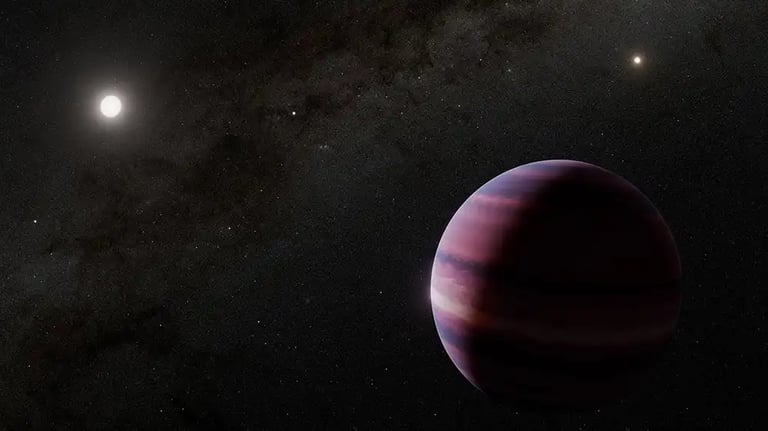

Astronomers have potentially imaged a Saturn-mass planet in the habitable zone of Alpha Centauri A using the James Webb Space Telescope (JWST), marking a significant discovery in the search for exoplanets.
If confirmed, this planet would be the closest known exoplanet in the habitable zone of a Sun-like star, although as a gas giant, it would not support life as we know it.
The research team, led by Charles Beichman of NASA, has been working on this project for nearly a decade, with initial concepts proposed back in 2017.
The detection process utilized JWST's Mid-Infrared Instrument (MIRI) with a coronagraphic mask to block out the light from Alpha Centauri A, revealing an object faintly detectable at a distance of about two times that between the Earth and the Sun.
Initial observations in August 2024 detected the candidate planet, referred to as S1, but subsequent observations in February and April 2025 did not confirm its presence, leading to skepticism about its existence.
There is a 52% chance that S1 could be associated with another candidate, C1, observed previously, complicating the analysis due to orbital dynamics.
Future observations with JWST and NASA's upcoming Nancy Grace Roman Space Telescope, set to launch in 2027, are planned to confirm the planet's existence and explore its characteristics further.
While the planet itself may not be habitable, scientists speculate that its moons could potentially support life, similar to moons like Europa and Titan in our solar system.
The candidate planet is estimated to have a temperature around 225 Kelvin, comparable to Saturn, allowing for interesting comparative analysis with gas giants.
This discovery signifies a shift in exoplanet search methodologies, highlighting the capabilities of direct imaging in planetary science.
The findings were published on August 7, 2025, in two companion papers in The Astrophysical Journal Letters, detailing the challenges and significance of the discovery.
Charles Beichman emphasized the importance of this discovery, noting the challenges faced in observing such bright and close stars with the JWST.
Summary based on 13 sources
Get a daily email with more Science stories
Sources
Forbes • Aug 7, 2025
Possible Alpha Centauri Exoplanet Likely One Of The First We’ll Visit
NPR • Aug 7, 2025
Scientists find a planet from the Avatar movies in real life
Nature • Aug 7, 2025
Alien planet glimpsed in star's 'habitable zone'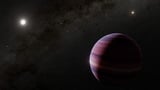
Gizmodo • Aug 7, 2025
If This Planet Is Real, It Would Break So Many Records