NYU Abu Dhabi Study Reveals Ancient Water Activity on Mars, Extends Habitability Timeline
November 29, 2025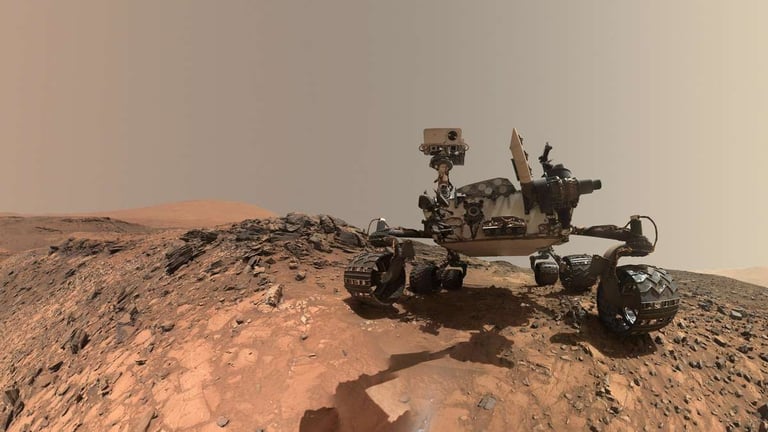

A NYU Abu Dhabi–led research team presents evidence that ancient groundwater interacted with wind-deposited dunes in Gale Crater, Mars, lithifying the Stimson Formation and extending habitable conditions beyond previous estimates.
Under the surface, water percolated through cracks from a nearby Martian mountain into dunes, leaving gypsum deposits and signaling ongoing subsurface moisture even after surface water disappeared.
The study, published in the Journal of Geophysical Research—Planets, analyzes Curiosity rover data from Gale Crater and compares it with mineralogical signatures in UAE desert analogues, finding striking similarities in formation processes.
The study’s authors include Dimitra Atri (PI) and colleagues from NYUAD and affiliated institutes, with results published in the Journal of Geophysical Research—Planets.
Building on prior work, the study extends understanding of Mars’ habitability timeline, suggesting episodic or extended habitable conditions rather than a rapid transition to uninhabitability.
Scholarly context remains debated about how long Mars stayed habitable, with a warm, wet early epoch roughly 3.7 to 4.5 billion years ago and some studies suggesting underground life persisted longer than surface life.
New findings from NYU Abu Dhabi researchers, using Curiosity data and field analogues, infer late-stage aqueous activity in the Noachian period (about 4.1 to 3.7 billion years ago).
The research places the Noachian Period as a time of significant aqueous processes forming durable rock formations, aligning with observations of lithified dunes by Curiosity.
Lithified Gale Crater deposits could preserve ancient microbial life, making them promising targets for future Mars missions.
Mineral inclusions identified may act as time capsules, preserving traces of organic material for future biosignature searches.
These minerals function as natural preservatives for organic material, enhancing their value for missions seeking signs of past life.
Summary based on 4 sources