Astronomers Unveil First Direct Supernova Breakout Shape Measurement, Challenging Explosion Models
November 30, 2025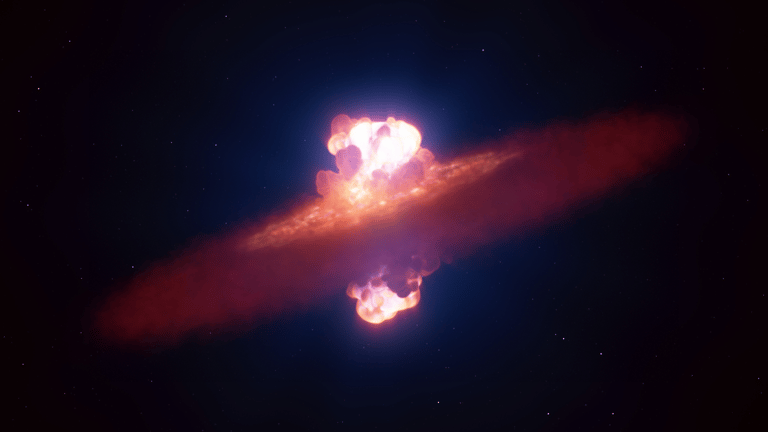

By around day 10, hydrogen-rich outer layers surfaced along the same axis, suggesting a stable, directional explosion mechanism throughout the event.
Astronomers achieved the first-ever direct measurement of a supernova's initial breakout shape using spectropolarimetry with the VLT FORS2 instrument, revealing an elongated, non-spherical explosion.
The initial shock was stretched along one axis, indicating the explosion was directional from the very start rather than perfectly spherical.
An artist’s impression highlights the breakout phase, emphasizing the newly observed asymmetry in the early evolution of the supernova.
The event, SN 2024ggi, occurred in galaxy NGC 3621, about 22 million light-years away in the Hydra constellation, with first light detected by ATLAS on April 10, 2024 and follow-up observations the next day.
These observations challenge or constrain existing supernova models, offering new insights into how massive stars die and how shocks propagate through stellar material.
The study detailing these findings was published on November 12, 2025, in Science Advances.
Summary based on 1 source
Get a daily email with more Science stories
Source
Live Science • Nov 30, 2025
Scientists mapped the shape of a supernova for the first time ever – and it's not what we expected: Space…