Astrobotic's Clavius-S: Revolutionizing Moon-to-Earth Space Monitoring with Real-Time Tracking
December 8, 2025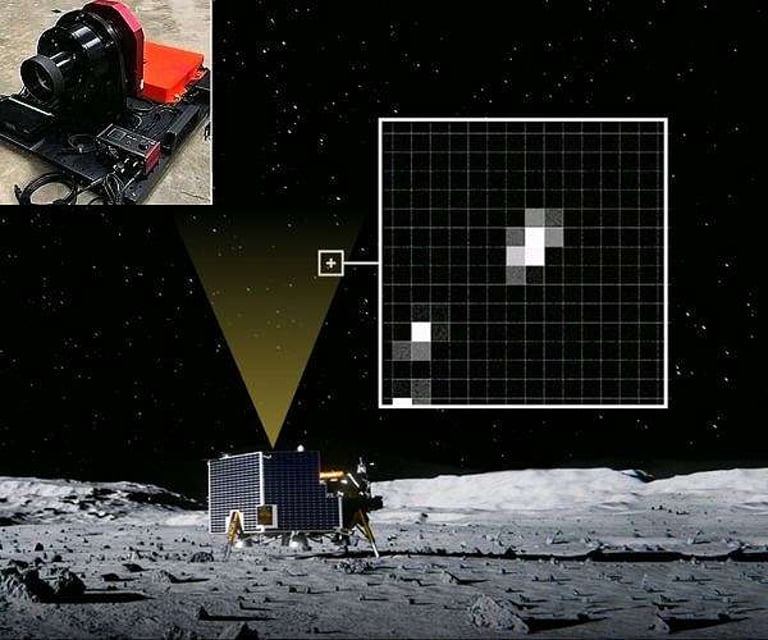

A NASA SBIR Phase I award supports Clavius-S, a visible-band imager intended to detect and track spacecraft in low lunar orbit in real time from the Moon’s surface.
Astrobotic SSA sensors use custom high-throughput optics, sensitive detectors, and powerful onboard computers with advanced algorithms to detect very faint objects in cislunar space and Earth orbit.
Astrobotic is developing a scalable family of Moon-to-Earth sensors to enable persistent tracking of space objects from multiple vantage points in cislunar space and Earth orbit.
The Clavius-S sensor suite is designed to operate through the Moon’s night and harsh temperatures, withstand dust, and maintain continuous tracking, with placement near overhead traffic and adjustable orientation to minimize glare from lunar light.
The Clavius-S payload is modular and can be deployed on various lunar landers and integrated into future LunaGrid surface power nodes to form a space-domain awareness network that monitors objects a thousand kilometers or more above the Moon.
Onboard compute and hardware-accelerated computer vision enable real-time detection of fast-moving objects, building on Astrobotic’s experience in autonomous optical navigation and space-domain awareness tech.
Ground-based, orbital, and surface sensors each have tradeoffs: Earth-based sensors struggle with range and brightness, orbital sensors contend with stray light, while surface instruments gain proximity, reduce glare, and benefit from stable observation platforms.
Growing lunar traffic from government and commercial missions drives the need for improved tracking, conjunction assessment, object identification, and security monitoring around the Moon.
With multiple Clavius-S units on the lunar surface, Astrobotic aims to offer space-domain awareness as a service to government and commercial clients and is developing an orbital variant called Clavius to monitor a broader cislunar volume.
Summary based on 1 source