Jupiter Shines Brightest in January's Dark Skies: Stargazing Tips for Northern and Southern Hemispheres
January 18, 2026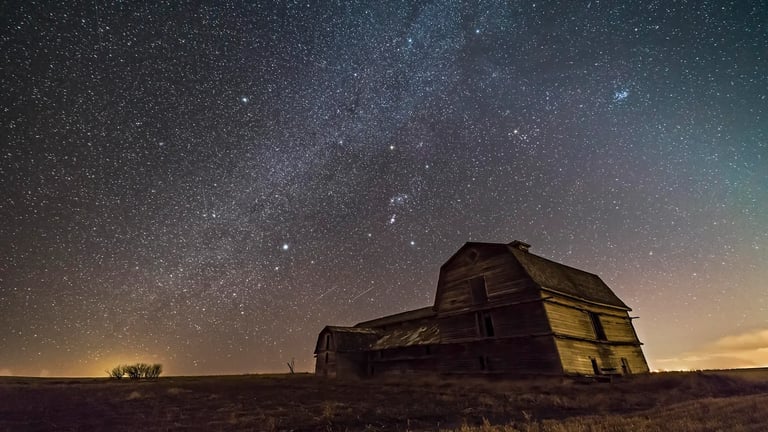


Biographical notes about the author, including journalism background and education, are provided, along with a comment about public display-name requirements for commenting.
The Winter Circle (Winter Hexagon) can be traced starting at Sirius and moving clockwise through Procyon, Pollux, Capella, Aldebaran, and Rigel, returning to Sirius; Jupiter nearby aids star-hopping around the region.
Jupiter stands out as the brighter planet in the January sky and can be found using a rough triangle of nearby stars, with guidance for mid-Northern latitudes; it remains visible most of the night and sets around early morning in New York.
For readers seeking more, Forbes offers additional guides on stargazing and 2026 celestial events.
The January 15–17 weekend offers exceptionally dark skies due to a waning crescent and a new moon, making it the darkest so far in 2026.
This weekend spotlights Orion, Taurus, and Gemini, with Orion’s Belt guiding viewers toward Taurus and Gemini.
Mercury, Venus, and Mars are too close to the Sun to observe, but Mercury and Venus are expected to emerge as evening stars in February and March, with Mars appearing in predawn skies in March.
Upcoming night-sky highlights after the new moon include Earthshine-moon crescents, a close approach to the Pleiades, and a near pass to Jupiter in late January.
The new moon occurs in the afternoon of January 18, lending darker skies ideal for viewing fainter objects.
Southern Hemisphere observers are guided to follow the Argo constellations (Puppis, Carina, Vela) rising in the east by 10 p.m., with orientation using bright stars and the Southern Cross from Santiago, Chile.
Saturn and Jupiter are the prominent planets on January 18, with Saturn about 37 degrees above the southwestern horizon around dusk, and Jupiter rising in the late afternoon and becoming visible after sunset, then transiting near midnight in New York.
Detailed northern-hemisphere star-hopping cues identify prominent winter constellations and stars, including Orion, Gemini, Taurus, Canis Major, Sirius, Betelgeuse, Rigel, Procyon, Aldebaran, the Hyades, the Pleiades, and the Big Dipper, with Jupiter’s position used as a reference point.
Summary based on 2 sources