Europe's Strategic Push for Space Autonomy Amid Global Competition Intensifies
April 3, 2026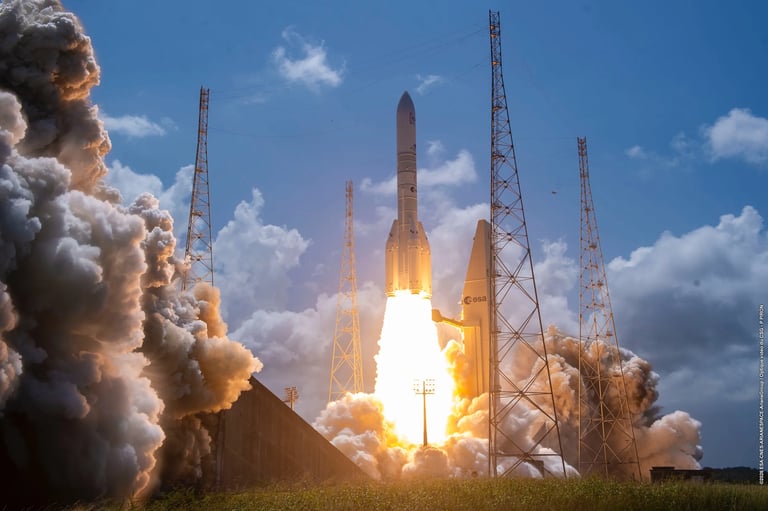

Europe is pursuing strategic space autonomy as it enters the 'second space age,' aiming to reduce dependence on non-European technology as space infrastructure becomes vital to security, economy, and daily life.
To de-risk and scale European space startups, the plan blends EU, national, and private funding, ensuring long-term support for projects like Ariane 6 and the European Launch Challenge.
Key actions include building European launch capabilities, securing resilient satellite networks, creating European supply chains for critical tech, expanding reusable launch research, pursuing in-orbit servicing and satellite cybersecurity, and leveraging Horizon Europe and the EU Space Fund to back innovation.
Europe should pursue targeted international collaboration with reliable partners such as Canada, Japan, and India for specific technologies, while keeping European systems under European control, including dual-use innovations like the Galileo Public Regulated Service.
The urgency is driven by intensified global competition from the United States—dominated by the private sector with SpaceX—and rapid Chinese space advances, underscoring the need for Europe to accelerate its own launch systems and technologies.
Europe remains dependent on external providers for crucial space components and services, creating vulnerabilities during political or operational crises, even as assets like IRIS², Galileo, and Copernicus demonstrate European leadership.
Autonomy requires clarifying roles among ESA, national agencies, and industry, creating testing environments for standards and certification, and fostering risk-taking through venture capital and public contracts.
Governance reform is needed to unify funding and accelerate decision-making across EU institutions, ESA, member states, and private industry, with a focus on expanding defense and security-related space programs in the next EU budget.
The conclusion is clear: Europe must act decisively—invest, innovate, govern cohesively, and build independent, resilient space capabilities before falling behind in the second space age, where leadership opportunities will close quickly.
Summary based on 1 source
Get a daily email with more Space News stories
Source
SpaceNews • Apr 3, 2026
Europe’s strategic autonomy in space will define its role in the ‘second space age’