Venus Shines Brightest in 2026: A Celestial Showcase of Elongations, Conjunctions, and Sky Events
April 3, 2026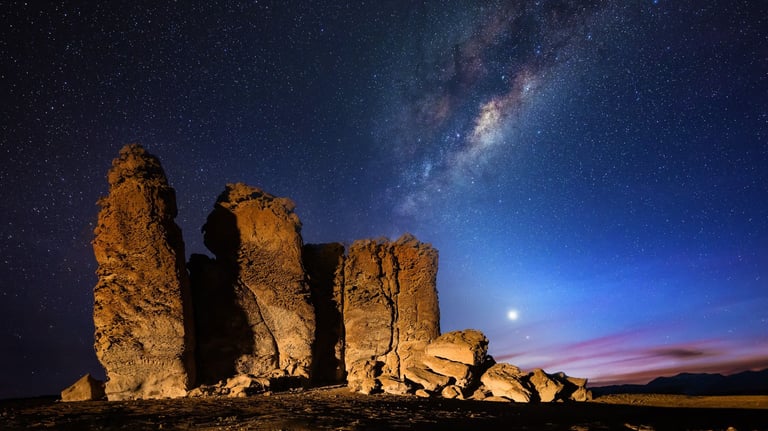

Venus reaches its greatest eastern elongation of 46 degrees on the eve of August 2026, and peaks in brightness around mid-September at magnitude −4.8, before fading as it moves toward the Sun and vanishes by late October during inferior conjunction.
In spring 2026, Venus returns to the evening sky after winter, becoming a dominant western object for roughly five months as it brightens.
On the evening of April 23, 2026, Venus passes within about three-quarters of a degree of Uranus, making Uranus accessible with small telescopes, while also approaching the Pleiades by about 3.5 degrees in the same skyward sweep.
In telescope-friendly terms, Venus exhibits dramatic phase changes and disk growth through October 2026, shifting from gibbous toward crescent as the apparent size increases, with guidance for binocular and telescope observers included.
During June 2026, Venus sits about 30 degrees above the sunset horizon at greatest evening elongation, and a notable gathering occurs around June 9–17 with Venus, Jupiter, the Moon, Mercury, Pollux, and Castor clustered in the western sky.
Beginning in November 2026, Venus returns to the eastern predawn sky for a morning appearance, with a close pairing to the crescent Moon and the bright star Spica on November 7, and it may evoke a modern Star of Bethlehem during Christmas as Venus leads the dawn sky.
After a superior conjunction on January 6, 2026, Venus brightens rapidly in March, with its sunset-to-Venus-set time interval growing from about 60 minutes to nearly 100 minutes.
Summary based on 1 source
Get a daily email with more Space News stories
Source
Space • Apr 3, 2026
Venus shines at its best in spring and summer 2026 — here's what to look for