Graphene Aerogels Propel Forward in Space: Light-Driven Propulsion Breakthrough Unveiled
April 8, 2026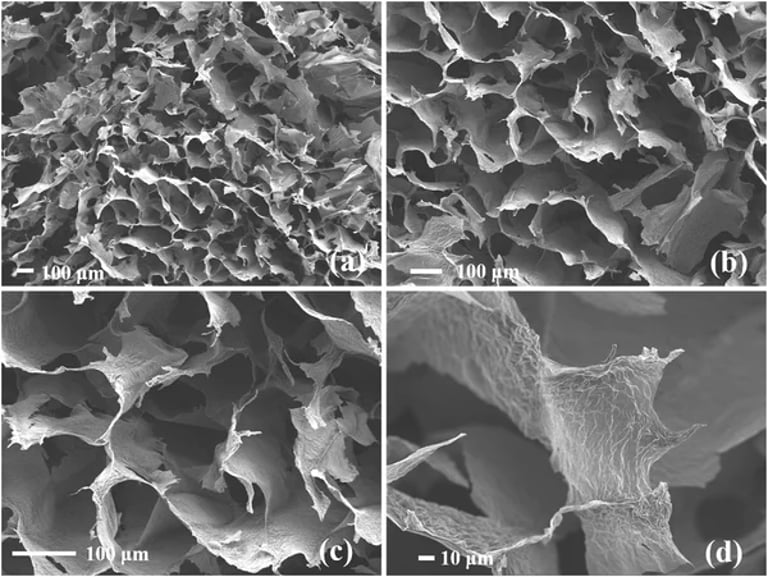

An international team tested ultralight graphene aerogels during ESA’s parabolic flight campaign in May 2025 to study light-driven propulsion under space-like conditions.
ESA stresses future implications include propellant-free propulsion and possible savings on fuel and hardware, with ongoing Enable initiatives exploring benefits of 2D materials.
The propulsion effect is tunable: stronger laser pulses increase acceleration, then a slowdown as the aerogel responds, indicating controllable propulsion dynamics.
In near-zero gravity, laser exposure caused rapid acceleration of graphene aerogel cubes, while Earth’s gravity yielded negligible movement; acceleration grew with laser intensity.
Under Earth gravity the aerogels move minimally, but in vacuum simulations of space they accelerate quickly with laser pulses, indicating a strong microgravity-enabled propulsion effect.
Researchers say this work is a fundamental step toward efficient light-based propulsion, though further study is required to translate it into practical spacecraft systems.
ESA materials physicist Ugo Lafont highlights the work as opening a path to propellant-free propulsion with potential implications for fuel savings and mission design.
In microgravity, light propulsion of graphene aerogels shows promise for space applications, including solar sails and attitude control of small satellites, driven by light-induced acceleration.
A collaboration between Université libre de Bruxelles and Khalifa University produced a graphene aerogel with a lightweight yet mechanically strong, air-rich scaffold that also conducts electricity.
The propulsion mechanism exhibits a correlation between laser intensity and acceleration, suggesting potential for propellant-free propulsion and reduced fuel and hardware needs.
Key collaborators include Université Libre de Bruxelles and Khalifa University, with the study published in Advanced Science and led by ESA project scientist Marco Braibanti.
Vacuum tests showed continuous laser irradiation produced rapid acceleration within 30 milliseconds, whereas normal gravity limited motion on Earth.
Summary based on 3 sources
Get a daily email with more Space News stories
Sources
Quantum Zeitgeist • Apr 8, 2026
ESA: Graphene Aerogels Accelerate In 30 Milliseconds In Microgravity
Graphene and lasers for space propulsion
Graphene and lasers for space propulsion