LeoLabs' Delta Platform Enhances Space Threat Detection for Military and Government Use
April 9, 2026

Delta is positioned as a higher-value intelligence service, advancing from raw radar data to actionable threat assessments while complementing ongoing classified government surveillance.
Delta is already in operational use with several allied governments in Europe and Asia, who are integrating it into their military space operations.
Delta relies on LeoLabs’ ground-based radar network and its catalog of tracked objects to monitor deviations, patterns, and anomalies.
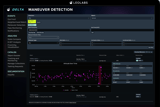
LeoLabs has launched Delta, a space situational awareness platform that detects unusual satellite behavior in low Earth orbit for military and government operators, moving beyond simple collision avoidance.
The broader market trend shows growing defense-focused LEO constellations and increased counter-space concerns among allies, driving demand for intent characterization tools.
With the orbital landscape expected to reach tens of thousands of satellites by 2030, Delta aims to speed decision-making and distinguish routine motion from deliberate hostile actions.
Long-term growth projections reinforce Delta’s relevance as allied defense postures anticipate numerous satellites and a need to separate routine operations from threats.
Delta analyzes radar data and orbital models to detect changes and issue alerts when potentially adversarial objects align with user assets, providing early warnings of unusual proximity.
The system combines sensor data with contextual satellite information (identity, mission, operator) to classify behavior and assess alignment with declared missions.
Delta flags patterns such as co-planar maneuvering and repeated close approaches to signal intent like surveillance or interference, going beyond standard conjunction assessment.
It also flags deliberate or anomalous movements that could indicate threats, such as orbital-plane changes aimed at approaching other assets.
The approach blurs the line between commercial space firms and defense intelligence, with governments likely using a layered mix of classified capabilities and commercial threat assessments.
Summary based on 2 sources