EDGX's STERNA AI Edge Computer Revolutionizes Satellite Data Processing with SpaceX Launch
April 9, 2026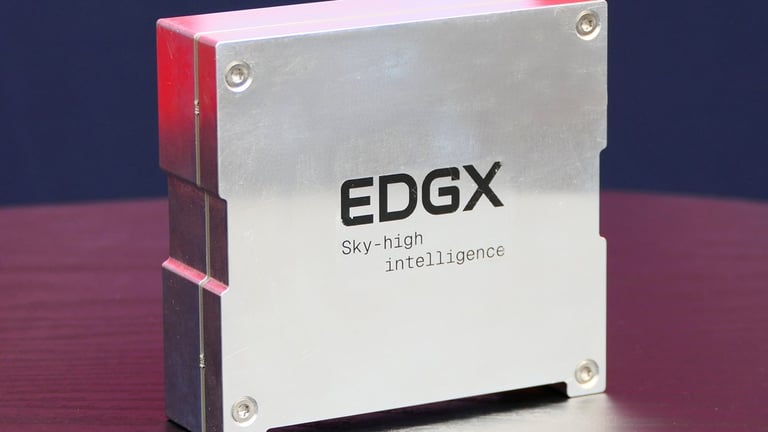

EDGX launched its first in-orbit demonstration of the STERNA AI-powered edge computer on SpaceX’s Transporter-16 mission, marking a milestone for onboard satellite processing.
The Ghent‑based company partnered with SpaceX to test STERNA’s ability to run AI workloads in orbit, reducing reliance on terrestrial data centers.
The mission aims to turn satellites into intelligent, software‑defined systems that process data where it is generated, enabling faster decision‑making and lower latency.
The project follows a €2.3 million seed round in June 2025 and a €1.1 million commercial contract with a satellite operator, signaling growing interest in space‑based computing for telecoms and device‑to‑device communications.
Applications span commercial, governmental, and defense sectors, including Earth observation analytics and real‑time signal intelligence.
CEO Nick Destrycker says onboard compute will define the next phase of the space industry and transform data processing workloads.
Post‑launch plans include delivering reliable in‑space edge compute for Earth observation analytics and real‑time signal intelligence, plus a compute‑as‑a‑service model with two pilot projects planned this year.
STERNA is designed to run high‑performance workloads in orbit for seven years, with power adjustable from 10W to 45W to match thermal and in‑orbit conditions, enabling Nvidia‑based compute aboard satellites.
Dynamic power scaling from 10W to 45W supports varying conditions, aiming for a seven‑year operational lifetime in orbit.
The initiative aligns with broader industry interest in space‑based data centers and orbiting AI, echoed by studies and industry leaders advocating orbiting compute.
Processing data in orbit aims to cut bandwidth needs and speed up decision‑making for satellite operators, with potential defense applications for real‑time analytics.
The mission is described as a milestone for Europe’s leadership in space‑based computing and a move toward real‑time satellite decision‑making.
Summary based on 2 sources
Get a daily email with more Space News stories
Sources

Yahoo Finance • Apr 9, 2026
EDGX launches first in-orbit demonstration of its AI computing system on SpaceX Transporter-16
TelecomTV • Apr 9, 2026
EDGX boasts AI edge computing trial in space