NASA's Artemis 2 Achieves Key Milestone; Heat Shield Design to Evolve for Future Lunar Missions
April 17, 2026

Artemis 1 had shown unexpected material liberation during reentry, prompting improvements such as the skip reentry technique used on Artemis 2 to manage thermal loads.
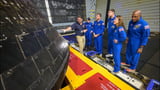
After splashdown off the California coast, astronauts Reid Wiseman, Victor Glover, Christina Koch, and Jeremy Hansen inspected the capsule Integrity from the USS John P. Murtha.
NASA described the heat shield as performing wonderfully during reentry, with minimal wear on the shield’s shoulder and the shield remaining in optimal condition.
After Artemis 1, concerns about heat shield damage prompted caution and debate about continuing with the same design for Artemis 2.
Artemis 4 is planned as a more distant lunar mission featuring a privately developed lunar lander and a hot return, showing ongoing hardware and mission-profile evolution.
The skip reentry technique used on Artemis 2 helped dissipate heat and reduce thermal loads, addressing issues from the 2022 uncrewed test.
Artemis 2’s heat shield performance is a major milestone, but NASA plans to modify heat shield design for future missions, with Artemis 3 staying in Earth orbit for docking tests before a later lunar landing.
The article includes a Spanish FAQ section explaining Avcoat, skip reentry, where Artemis 2 Amerized, and future Artemis steps, along with technical context for the Thermal Protection System.
Artemis 2 returned to Earth with the Orion capsule Integrity after a high-speed reentry and Pacific splashdown on April 10, 2026, marking a turning point in lunar exploration.
Commander Reid Wiseman and the crew reported the bottom of the heat shield looked great with only minor char loss around the shoulder where it meets the spacecraft structure, after inspecting Integrity post-splashdown.
Avcoat burns away in a controlled fashion to form a protective gas boundary layer, and NASA plans to move toward a honeycomb shield design for future missions like Artemis 4 to improve gas management.
Artemis 2 used the Integrity heat shield, and early post-splashdown checks indicated strong performance under reentry pressure.
Summary based on 2 sources