TakeMe2Space Secures $55M to Launch Gigawatt-Scale Orbital Data Centers with Nvidia-Powered Cubesats
April 17, 2026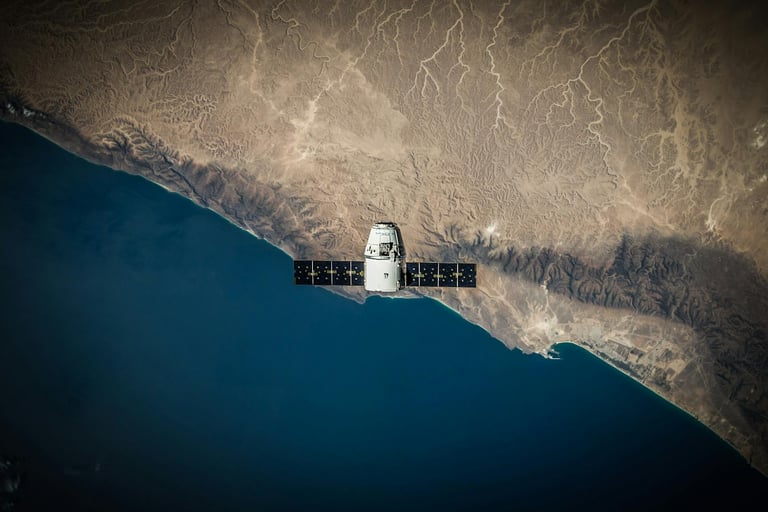

The company is targeting a gigawatt-scale orbital data center by validating small, vacuum- and radiation-tolerant compute modules in orbit, starting with an Nvidia Jetson-powered cubesat planned for a SpaceX Falcon 9 rideshare later this year to prove the concept.
A six-unit cubesat sequence is planned for October, featuring an Nvidia Jetson module on a SpaceX Falcon 9 rideshare, followed by a 2027 mission with four 100-kilogram satellites to share data via optical inter-satellite links.
Initial use cases center on Earth observation workloads—agricultural yield models, crop insurance loss assessments, mining surveys, and environmental monitoring—where AI inference runs in orbit and only results are downlinked to save bandwidth.
Leadership brings credibility: Samantray has past SaaS exit experience from NowFloats Technologies, and TakeMe2Space designs most components in-house (except solar cells and propulsion), leveraging India’s cost structure and domestic supply chains.
Execution risk includes scaling to gigawatt-scale compute in orbit, which demands large solar arrays, radiators, and intersatellite links; competition from US, Chinese programs, and hyperscalers adds pressure, while Earth-observation demand could offer an edge.
Three core arguments for orbital compute: onboard edge inference reduces downlink costs, terrestrial data-center resilience concerns drive interest, and space-based infrastructure growth suggests rising compute needs beyond Earth.
The seed funding is viewed as sufficient to prove orbital inference works, but scaling to a full gigawatt constellation will require different capital, customers, and regulatory relations.
TakeMe2Space, an Indian startup led by Ronak Kumar Samantray, closed a roughly $55 million seed round to develop orbital data centers in low Earth orbit and aims to raise about $55 million to build a 50-kilowatt orbital data center after a smaller seed round earlier.
Targeting roughly $15 million in annual revenue with five kilowatts of in-orbit compute, the plan also includes reducing launch costs by 2029–2030 to enable broader AI training data uploads.
Early markets identified include agriculture and insurance for Earth-observation data and AI inference, with growing demand for on-orbit storage as a service.
OrbitLab is enabling model uploads and pay-per-use for AI inference, with pilots showing in-orbit inference and a goal of meaningful annual revenue by 2027 from in-orbit compute and storage across a constellation.
The upcoming Jetson-enabled cubesat is a pivotal datapoint: success would accelerate commercial orbital constellation plans, while underperformance could confine the vision to niche in-orbit agricultural intelligence.
Summary based on 2 sources
Get a daily email with more Space News stories
Sources

SpaceNews • Apr 16, 2026
India’s TakeMe2Space sets sights on 50-kilowatt data center
Space Daily • Apr 17, 2026
The $55 Million Bet That Data Centers Belong in Orbit, Not Bunkers