DESI Completes Largest 3D Universe Map, Suggests Dark Energy Evolution
April 19, 2026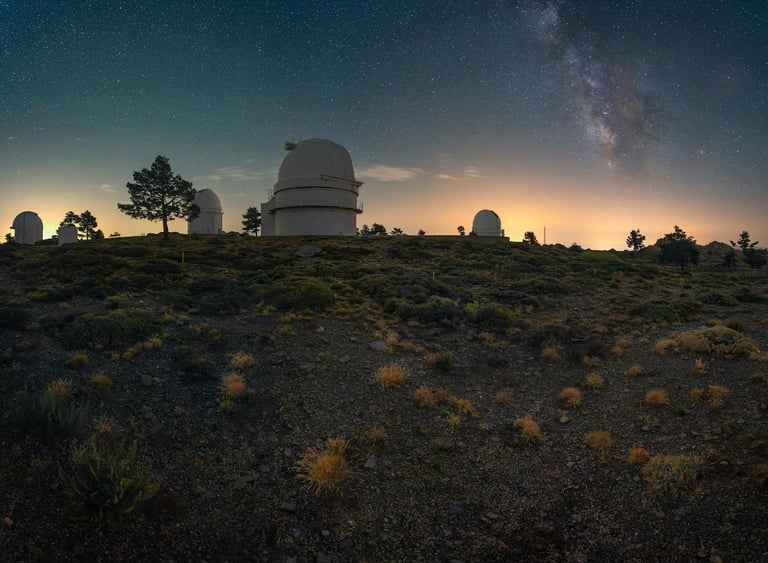

DESI completes the largest high-resolution 3D map of the universe, charting tens of millions of galaxies and quasars over five years, with initial results hinting that dark energy may evolve over time rather than be a fixed constant.
The project aims to probe dark energy—driving the universe’s accelerated expansion and making up about 70% of the cosmos—by comparing galaxy distributions across different epochs.
If dark energy varies with time, this would force a fundamental revision of the standard cosmological model, potentially altering predictions about the fate of the universe and the pace of cosmic expansion.
The survey used 5,000 robotic optical fibers on the Mayall Telescope to capture spectra, enabling precise measurements of baryon acoustic oscillations across billions of years.
The full five-year dataset will be analyzed in 2027, with results relying on cross-validation across independent analysis pipelines and complementary methods from other observatories.
The effort is a large international collaboration with over 900 researchers from more than 70 institutions, led by Lawrence Berkeley National Laboratory and funded by the U.S. Department of Energy Office of Science.
DESI’s five-year campaign at Kitt Peak National Observatory used 5,000 robotic fiber-optic eyes on the Mayall telescope to create the largest 3D map of the universe to date.
A visualization shows how the map has grown over five years, with captured light enabling reconstruction of the universe’s history over billions of years.
Observations will continue through 2028, expanding the map by about 20% to include fainter, more distant galaxies and new sky regions, with first results from the full dataset expected in 2027.
DESI’s multi-institution collaboration, featuring independent analyses of the same data, aims to ensure robustness of any evolving dark energy signal and withstand scientific scrutiny.
Scientific papers based on the full five-year dataset are anticipated in coming years, with major cosmology results around 2027 as the Dark Energy 3D Map reshapes our understanding of the cosmos.
This work marks the start of extensive follow-up, with hundreds of researchers analyzing the data to test dark energy models, study dark matter, and refine measurements of the universe’s expansion rate across epochs.
Summary based on 3 sources
Get a daily email with more Science stories
Sources

Live Science • Apr 19, 2026
Largest-ever 3D map of the universe shows 47 million galaxies, from the Milky Way to 'cosmic noon' —…
Pune Mirror • Apr 18, 2026
Dark Energy 3D Map Delivers Stunning Breakthrough for Cosmic Science
Space Daily • Apr 19, 2026
How DESI Turned 5,000 Robotic Fibers Into the Universe's Definitive Cartography Engine