NASA's FM2 Experiment: Pioneering Lunar Fire Safety for Future Moon Missions
April 19, 2026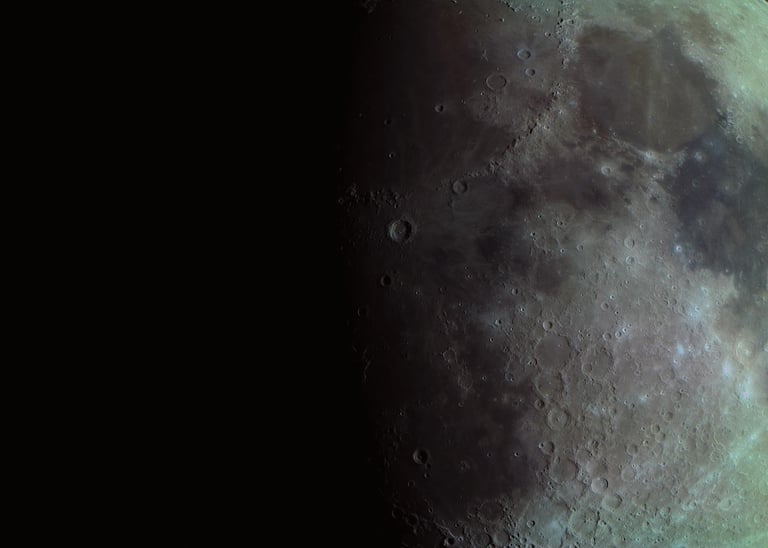


FM2 uses a sealed, self-contained combustion chamber with four solid fuel samples, ignited sequentially on a Commercial Lunar Payload Services lander, to observe flame behavior for minutes with cameras, radiometers, and oxygen sensors, isolating data from the lander for safety and data integrity.
Researchers caution that lunar gravity may be more hazardous for flame spread in certain partial gravity environments, with implications for spacesuit design and spacecraft safety.
Flames in space tend to form rounder shapes in microgravity, influencing fire safety design and material selection for spaceflight.
FM2 aims to provide benchmark data on how lunar gravity affects fire spread, addressing a gap in knowledge not fully covered by Earth-based tests or microgravity studies.
FM2 marks the first controlled combustion event on another world, establishing a precedent for safety engineering in crewed lunar programs.
Existing microgravity data (ISS, Saffire) do not fully address Moon-like partial gravity, which alters flame shapes, flow structures, and combustion chemistry.
If FM2 confirms lunar-burn models, spacecraft interiors may need design changes—alternative fabrics, ventilation layouts, and spacesuit outer layers—leading to a new set of standards indexed by mission gravity environment.
FM2 builds on decades of combustion experiments and uses NASA-STD-6001B as a baseline to understand fire behavior in space environments beyond Earth-like buoyancy.
The six-inch vertical flame test in NASA-STD-6001B may not predict lunar fire behavior due to the Moon’s different regulatory environment and gravity.
FM2 is positioned as a bridge to Artemis-era safety standards, providing essential data before full lunar habitat interiors and suit materials are locked in, with a longer-term goal of on-site lunar surface material qualification.
If FM2 succeeds, it will improve safety for crewed lunar missions by informing material choices and fire safety protocols and advancing understanding of space combustion physics.
NASA is conducting the FM2 experiment to study how materials burn on the Moon, recognizing that Earth-based flammability standards may not apply in one-sixth gravity.
Summary based on 2 sources
Get a daily email with more Tech stories
Sources
Gizmodo • Apr 17, 2026
NASA Plans to Start a Fire on the Moon in First-of-Its-Kind Experiment
Space Daily • Apr 19, 2026
Why NASA Is Lighting Fires on the Moon: The Gravity Blind Spot in Spacecraft Safety Standards