Princeton Study Warns of Satellite Collision Risks with New CRASH Metric Amidst Space Traffic Surge
May 1, 2026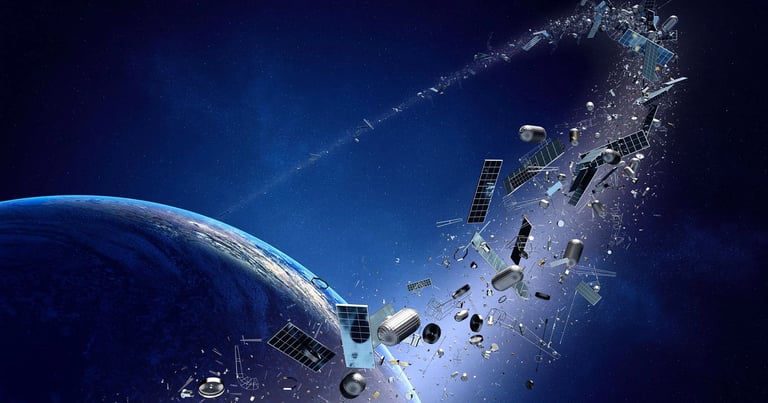

Importantly, the authors do not call for halting satellite deployment; rather, they stress the need for continuous, precise collision-avoidance and robust control capabilities.
SpaceX data shows a typical Starlink satellite performs collision-avoidance maneuvers about every 1.8 minutes, illustrating the high frequency of avoidance activity in the network.
Under a communication blackout, the CRASH metric suggests the time to a major collision could shrink to as little as 2.8 days, down from roughly 164 days in 2018.
A Princeton-led study unveils the Collision Realization and Significant Harm (CRASH) metric, estimating how quickly a major satellite collision could occur if Earth lost communications with orbiting satellites.
The analysis warns the low-Earth orbit is increasingly congested, with frequent collision-avoidance maneuvers signaling close-encounter risks, driven in large part by proliferation of satellites including Starlink.
These findings raise concerns for future missions, such as Artemis II, if the space debris environment becomes untenable due to loss of control and higher collision likelihood.
The study contextualizes the risk with references to the Kessler Syndrome and solar-storm disruption analogies, underscoring how space weather could worsen collision probabilities.
Summary based on 1 source
Get a daily email with more Space News stories
Source

PetaPixel • May 1, 2026
Satellites Could Start Smashing into Each Other in Less Than Three Days, Study Finds