Russia's Soyuz-5 Rocket Launch: A Milestone in Space Strategy and International Collaboration
May 1, 2026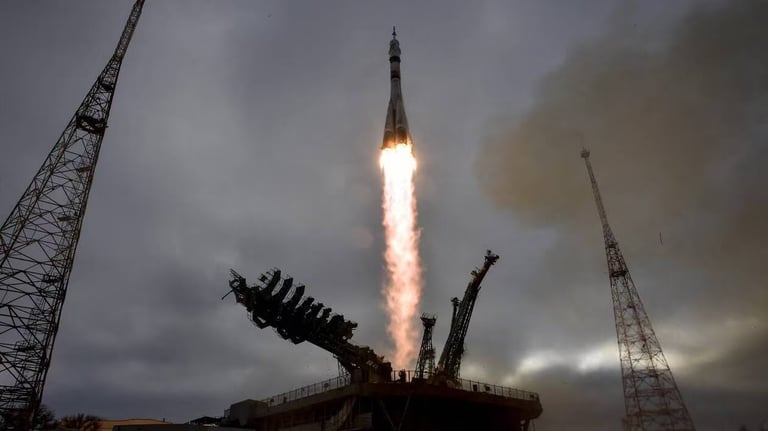


Russia successfully test-launched its new Soyuz-5 rocket from Baikonur in Kazakhstan, marking the first flight of the launcher developed since 2014.
The launch took place at 21:00 Moscow time on April 30, with Roscosmos confirming the timing.
Roscosmos notes the test is significant for Putin and Russia's space strategy, highlighting Soyuz-5 as a milestone in national space policy.
Officials position Soyuz-5 as more cost-effective and capable than predecessors for placing payloads into near-Earth orbit.
The system is expected to reduce launch costs and improve efficiency for delivering objects into low-Earth orbit.
The launch underscores ongoing collaboration with Kazakhstan via Baikonur and could bring economic benefits to both nations.
Initial stages performed as planned, with a simulated suborbital trajectory and controlled reentry into a designated Pacific testing area.
Soyuz-5 is comparable in size to SpaceX’s Falcon 9, capable of about 20 tons to low-Earth orbit, but unlike Falcon 9, it is fully expendable with no reusable first stage.
Roscosmos emphasizes Soyuz-5 as powered by the world’s most powerful liquid-fueled engine and able to lift up to 17 metric tons.
The mission occurs amid broader geopolitics following the 2022 invasion of Ukraine, affecting international space partnerships and intensifying focus on domestic launch capabilities.
The Soyuz-5 project, in development since 2017, aims to replace Ukraine-built Zenit boosters and serve as a first-stage for future heavy-lift ambitions, strengthening Russia’s domestic launch capacity.
Roscosmos chief Dmitry Bakanov framed the test as a new step in space exploration that will create jobs in Russia and Kazakhstan.
Summary based on 4 sources
Get a daily email with more World News stories
Sources

Yahoo News • May 1, 2026
Russia successfully test launches new Soyuz-5 rocket from Kazakhstan, space agency says
Space • Apr 30, 2026
Russia's new homegrown Soyuz 5 rocket aces debut launch