New Model Suggests Ganymede's Dynamo Powered by Protracted Core Formation, JUICE Mission to Validate
May 10, 2026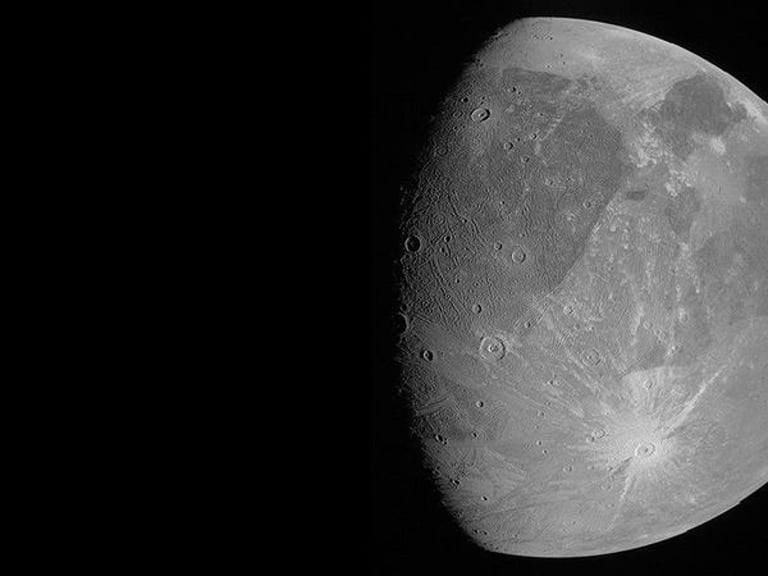

The study, titled Powering Ganymede's Dynamo with Protracted Core Formation, is led by Kevin Trinh at Caltech with co-authors from JPL and UT Austin, and funded by Caltech’s Barr Fellowship and NASA’s Solar System Workings program.
JUICE, arriving at the Jupiter system around 2031, will provide real measurements to test the new dynamo model against observations.
JUICE’s findings could support the cold-start picture by revealing a small assembling protocore and active Fe-FeS differentiation, or necessitate revising how the dynamo is powered if a fully formed core is detected.
The model makes testable predictions about interior structure and heat distribution that the JUICE mission could validate with gravity, magnetic, radar, and tidal data.
A new model challenges the traditional view by proposing that Ganymede's dynamo could be powered by protracted core formation starting from a colder initial state, rather than exclusively by an early, cooling core.
The authors acknowledge the new model does not rule out cooling-driven dynamos and call for further work to determine which mechanism best explains Ganymede's present magnetic field.
If correct, the scenario would place Ganymede in a third regime of dynamo behavior, still in core formation rather than a fully formed core or a fully cooled, differentiated planet.
A core model with an Fe-FeS composition and sub-eutectic melting is assumed, allowing ongoing differentiation and iron migration to sustain convection and a long-lived dynamo.
Published in Science Advances on May 6, the research argues Ganymede formed as a cold mix of ice, rock, and metal that gradually heated over billions of years.
Ganymede is the largest moon and the only known moon with a self-generated magnetic field, a magnetosphere and auroras evidenced since Galileo’s 1996 detection and later studied by Juno.
If borne out, the idea broadens the view of differentiation timelines for icy moons, with ongoing core formation influencing interior heating, ocean chemistry, and potential habitability in systems like Ganymede and Europa.
The cold-start scenario envisions initial little melting, delayed iron and rock differentiation, and gradual heating that drives protocore growth through heat sources such as radioactive decay and tidal heating.
Summary based on 2 sources
Get a daily email with more Space News stories
Sources

California Institute of Technology • May 7, 2026
Ganymede Might Still Be Forming Its Metal Core Today