Revolutionizing Space Food: eBeam Technology Enhances Quality and Efficiency for Long Missions
May 15, 2026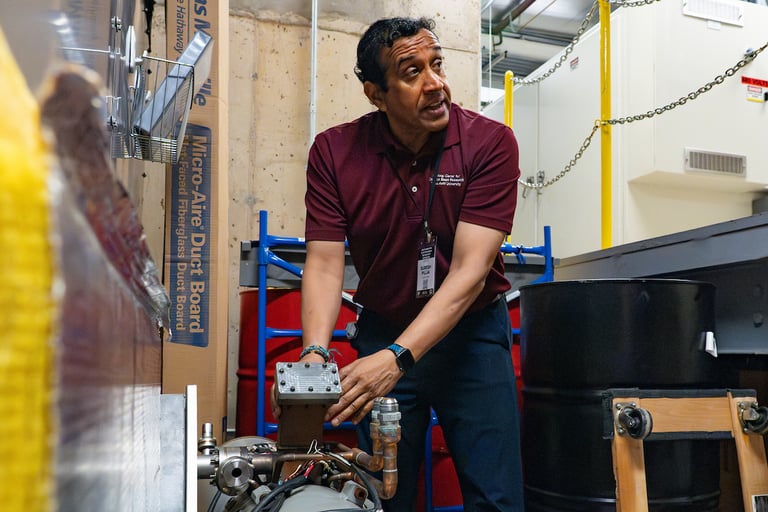

A continuous, non-batch process helps meet higher demand on longer missions, ensuring more food is ready for transport and consumption.
Modern sterilization science shows equivalent microbiological safety can be achieved with doses of 15 to 20 kilograys, compared with older standards that used around 44 kilograys, with potential quality gains.
Lower radiation doses aligned with current science could improve space food quality while maintaining safety.
Advances in sterilization science are enabling dose-based models rather than fixed minimum doses, offering flexible safety margins for space food.
Suresh Pillai, director of the National Center for Electron Beam Research, emphasizes updating technology to support long-duration missions and astronaut well-being.
eBeam uses ionizing energy to eliminate microorganisms and operates continuously, potentially boosting food production efficiency for longer space missions.
The push is for commercial and international space programs to adopt eBeam-based sterilization as missions extend beyond low Earth orbit.
Space food for long-duration missions could pivot from traditional thermal stabilization to electron beam (eBeam) processing, which uses ionizing energy to kill microbes while preserving texture, flavor, and appearance, and could replace many current thermal methods.
NASA’s current thermal processing, though effective for sterility, can alter texture and flavor; eBeam offers a path to maintain quality without sacrificing safety.
Unlike batch-based methods, eBeam operates continuously, increasing production efficiency and allowing more food to be prepared for longer missions to the Moon, Mars, or beyond.
As missions expand, private companies and international space programs stand to gain from scalable, high-quality space food systems that meet growing demand.
A Texas A&M AgriLife Research scientist, Suresh Pillai, advocates upgrading space food systems with eBeam to meet evolving mission needs and the psychological aspects of food.
Summary based on 2 sources