NASA's 2027 Mission to Unveil Hidden Asteroids Behind Mysterious Meteor Showers
May 15, 2026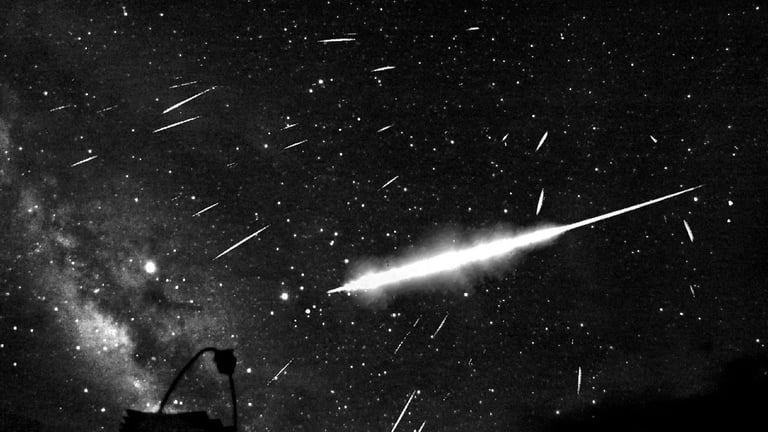

Identifying the parent asteroid is challenging, but NASA’s upcoming NEO Surveyor mission, planned for 2027, could help detect hidden near-Earth objects that approach the Sun and locate the source of this unusual meteor stream.
The NEO Surveyor mission, slated for launch in 2027, is expected to help locate the parent asteroid by detecting dark, possibly hazardous objects near the Sun, aiding the investigation of this meteor shower.
Scientists explain how night-sky cameras detect meteors and how small fragments entering Earth’s atmosphere reveal information about the solar system.
Evidence indicates the parent asteroid is cracking and releasing gas as it heats, leading to gradual disintegration.
The research found a meteor stream on an extreme orbit that takes it much closer to the Sun than Earth’s, underscoring rapid fragmentation driven by intense solar heating.
The Geminids arise from debris released near the Sun by asteroid 3200 Phaethon, illustrating how asteroid activity can drive meteor showers.
The observed fragments suggest the parent asteroid is fragile yet stronger than typical comet material, with fragmentation likely releasing trapped gases and gradually crumbling the body.
A March 2026 study analyzed millions of meteor detections and identified a cluster of 282 meteors traceable to an asteroid that approached very close to the Sun.
The same study describes a meteor stream linked to an active asteroid undergoing rapid fragmentation from severe solar heating, with an orbit bringing it about five times closer to the Sun than Earth.
Most meteoroids originate from comets, while asteroids are rocky and dry; both can become active when heat, collisions, or rapid rotation cause them to emit dust, gas, or larger material.
Asteroids differ from comets in that they are dry, rocky bodies, whereas comets release dust and gas as ice sublimates near the Sun; both can become active under triggers like heat, impacts, or rapid spinning.
Meteor showers can reveal hidden active asteroids and comets, as debris streams create periodic opportunities to observe when Earth intersects them, with notable examples like the Geminids.
Summary based on 2 sources
Get a daily email with more Science stories
Sources
ScienceDaily • May 14, 2026
Scientists discover a mysterious asteroid breaking apart near the Sun
SSBCrack News • May 15, 2026
Newly Discovered Meteor Stream Reveals Active Asteroid Near the Sun - SSBCrack News