ESA-CAS SMILE Mission Set to Launch, Mapping Earth's Magnetosphere in Groundbreaking Space Collaboration
May 15, 2026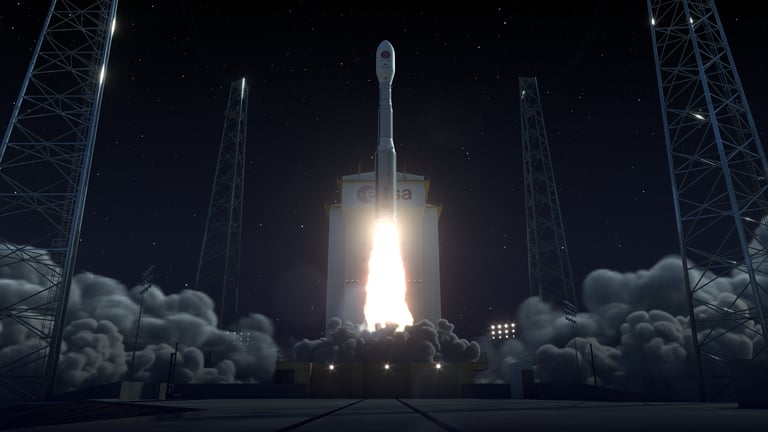

The Solar wind Magnetosphere Ionosphere Link Explorer (SMILE) is a joint ESA-CAS mission that will map Earth's magnetosphere with a soft X-ray imager, observing the Sun-facing boundary in near real time from a high elliptical orbit that reaches up to 121,000 kilometers above the North Pole.
ESA will broadcast a live launch of SMILE on May 19, 2026, from Europe’s Spaceport in French Guiana, using a Vega-C rocket.
The mission is planned for three years, during which SMILE will study the interaction between the solar wind and the magnetosphere to advance space weather understanding and Earth’s response to solar activity.
This launch marks Vega C’s seventh flight and Avio’s first time as launch operator, with Airbus as the prime contractor for the satellite payload module and one payload.
ESA provides the payload module and several instruments, CAS contributes additional instruments and in-orbit operations, and Vega-C is developed with Avio as part of Europe’s space accessibility program.
Officials anticipate significant findings and note that data sharing could boost international collaboration in space research.
Follow-up updates and detailed milestones will be shared through ESA channels, including the ESA Newsroom and social media under the #askESA campaign.
The SXI instrument, developed by the UK's University of Leicester, uses lobster-eye optics and large CCDs, requires cooling to minus 120 degrees Celsius, and embodies a major engineering challenge through EU-China collaboration.
The collaboration builds on the earlier Double Star mission and reflects broader geopolitical contexts influencing space cooperation, including shifting lunar plans and China-Russia space collaboration trends.
This is the first ESA-CAS mission designed, implemented, launched, and operated jointly, with data received at DLR’s O’Higgins ground station and China’s Sanya station.
The mission experienced delays due to a subsystem issue, export-control changes, and COVID-19 impacts, causing it to miss the original solar maximum window but remaining scientifically valuable.
Summary based on 4 sources
Get a daily email with more Science stories
Sources

SpaceNews • May 15, 2026
Joint ESA-China SMILE mission set for launch to study Earth’s magnetic shield
AAAS logo • May 14, 2026
Chinese-European mission to reveal shape of Earth’s magnetic shield
How to follow the Smile launch live
How to follow the Smile launch live
Preparing Smile for space
Preparing Smile for space