NASA's AWE Mission Ends After Groundbreaking Study of Atmospheric Gravity Waves and Their Space Impact
May 21, 2026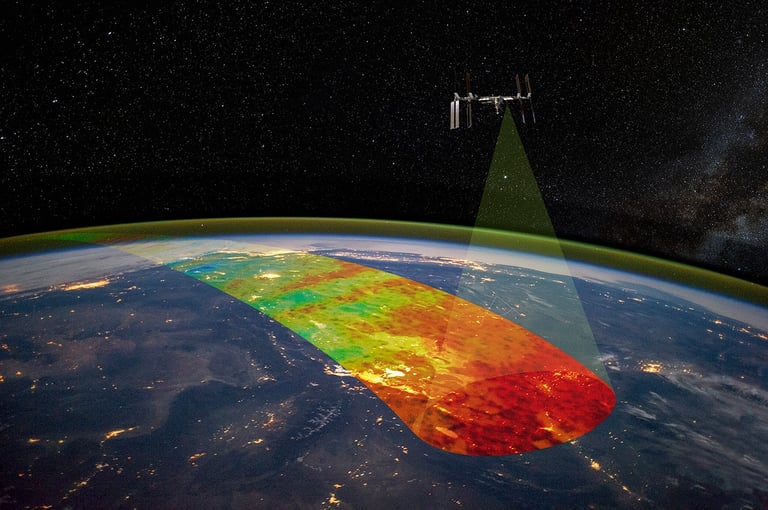

Key scientific findings include that the most influential gravity waves in the upper atmosphere have small horizontal wavelengths between 30 and 300 kilometers, detected by AWE.
During its 30-month residency, AWE captured over 80 million nighttime infrared images, observing waves from events such as the May 2024 central U.S. tornado outbreak and Hurricane Helene in September 2024, and it demonstrated variations in wave generation by different storm types.
AWE was launched on November 9, 2023, managed by NASA’s Goddard Space Flight Center, built by Utah State University’s Space Dynamics Laboratory, and operated from the mission operations center at USU.
The transition involved Canadarm2 removing AWE from its position on the ISS, after which the instrument will be loaded into a SpaceX Dragon for deorbit and burn-up, with observations continuing to be disseminated post-mission.
NASA’s Atmospheric Waves Experiment (AWE) on the International Space Station completed its data-collection phase and was powered down on May 21, 2026, after a 30-month mission that exceeded its planned two-year duration.
The instrument captured more than 80 million nighttime infrared images, enabling insights into wave patterns and their effects on upper-atmosphere plasma densities that can disrupt satellite communications, navigation, and timing signals.
AWE observed waves from numerous extreme weather events, including a May 2024 tornado outbreak in the central U.S. and Hurricane Helene affecting Florida in September 2024, revealing how different storms generate distinct wave signatures.
AWE studied atmospheric gravity waves—ripples in Earth’s atmosphere caused by strong winds over mountains and severe weather—to understand how these waves propagate into space and influence space weather, which can affect satellites, navigation, and communications.
Electric powering down paves the way for CLARREO Pathfinder, a new instrument that will measure solar radiance with significantly higher accuracy, to be installed on the space station exterior as a replacement for future research.
As AWE concludes, its data will remain publicly available to researchers and citizen scientists, with interactive visualizations released by Utah State University for ongoing study.
Key finding: gravity waves with the greatest influence on the upper atmosphere have small horizontal wavelengths between 30 and 300 kilometers, as measured by AWE.
AWE’s data helps explain how terrestrial weather can influence upper-atmosphere plasma density and radio signal reliability for satellite-ground and satellite-satellite communications.
Summary based on 2 sources
Get a daily email with more Science stories
Sources
NASA Science • May 21, 2026
NASA’s AWE Completes Mission to Study Earth’s Effect on Space Weather - NASA Science
Mirage News • May 21, 2026
NASA's AWE Wraps Up Mission on Space Weather Impact