Ancient Stromatolites in Crater Lakes: Clues to Early Earth Oxygenation and Martian Life Potential
May 22, 2026

New findings published in Communications Earth & Environment show stromatolites, among the oldest traces of life, extending their significance to crater lakes as potential early oxygen niches.
The research supports the idea that asteroid impacts can create oxygen oases in crater lakes, where early microbes thrived before Earth-wide oxygenation.
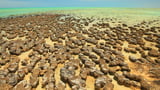
The stromatolites were discovered in Hapcheon crater’s northwestern area and measure about 10–20 centimeters in diameter, marking the site’s first such find.
This marks the first identification of crater-lake stromatolites in a site roughly 42,000 years old, highlighting the value of studying younger craters for clues about early Earth and potential Martian life.
A Korean team from the Korea Institute of Geoscience and Mineral Resources (KIGAM) reports stromatolites in Hapcheon crater indicating early oxygen-producing microenvironments in crater lakes around 2.4 billion years ago.
The Hapcheon crater was analyzed by KIGAM, with researchers identifying stromatolites—layered rock structures formed by ancient microbial communities—inside the crater.
Geochemical tests show the stromatolites formed in a hydrothermal lake fed by hot water alteration and inputs from extraterrestrial material and surrounding bedrock.
The team suggests that similar crater environments on Earth could have harbored life and preserved biosignatures, and that ancient cratered basins on Mars could have contained liquid water with life potential.
Heat and mineral-rich conditions from the crater impact likely warmed the water and supported microbial life in crater lakes after Earth’s early history.
The study strengthens evidence that Hapcheon crater exists and that stromatolites can form in hydrothermal lakes created by impacts, with broader implications for planetary science and the search for life on Mars.
The research appears in a Nature Portfolio journal and underscores KIGAM’s ongoing work to understand Earth system science and the origins of life.
The researchers propose that hydrothermal crater lakes could have provided isolated, oxygen-producing habitats that contributed to the Great Oxidation Event around 2.4 billion years ago.
Summary based on 2 sources
Get a daily email with more Science stories
Sources
ScienceDaily • May 22, 2026
Ancient asteroid craters may have sparked Earth’s oxygen-producing life