ESA and NASA Team Up for Unprecedented Dual-View Study of Interstellar Comet 3I/ATLAS
May 22, 2026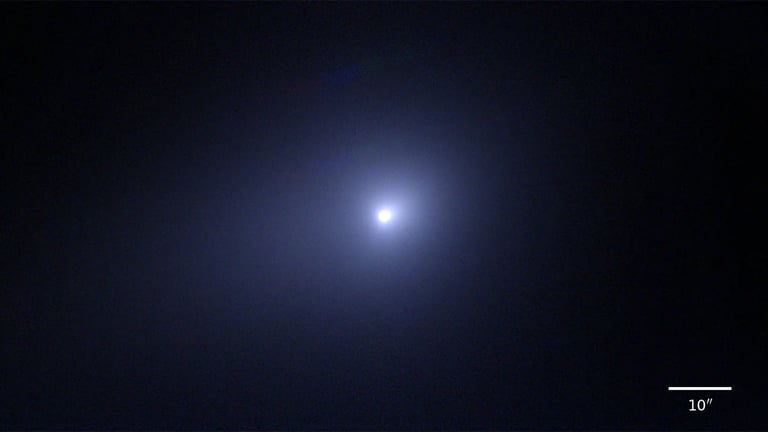

The study contributes to broader efforts to compare interstellar and Solar System comet compositions, including assessing water ice versus dry ice ratios to gauge formation environments.
Data also enable direct comparisons between the interstellar comet’s composition and Solar System comets, informing scientists about conditions in neighboring star systems.
SwRI-led science teams coordinating Ultraviolet Spectrograph observations on both missions captured the interstellar comet’s internal chemistry—detecting hydrogen, oxygen, and carbon emissions—as it emerged from behind the Sun.
Dr. Philippa Molyneux notes the dataset includes gas and dust, offering a rare, multi-day opportunity to study an interstellar object from two viewing geometries.
In November 2025, interstellar comet 3I/ATLAS was observed simultaneously by ESA’s JUICE and NASA’s Europa Clipper as it passed between the two spacecraft, yielding complementary coma views from opposite directions.
Observations show higher-than-expected carbon emissions early on and track how emission ratios change as the comet moves through the Solar System.
JUICE-UVS and Europa-UVS principal investigator Dr. Kurt Retherford calls the coordinated effort a notable demonstration of collaborative observational science.
SwRI researchers highlight the value of coordinating two missions for interstellar-object observations to advance understanding of planetary formation and chemical diversity across star systems.
Europa Clipper captured the night-side scattered-dust view while JUICE imaged the day-side glowing gas, marking the first simultaneous dual-direction view of a comet’s escaping gas.
Summary based on 1 source
Get a daily email with more Space News stories
Source
Universe Today • May 22, 2026
Both Hemispheres of 3I/ATLAS Observed Simultaneously by JUICE and Europa Clipper