Scientists Explore Fungi for Space Farming: Transforming Moon and Mars Soil for Crop Growth
May 23, 2026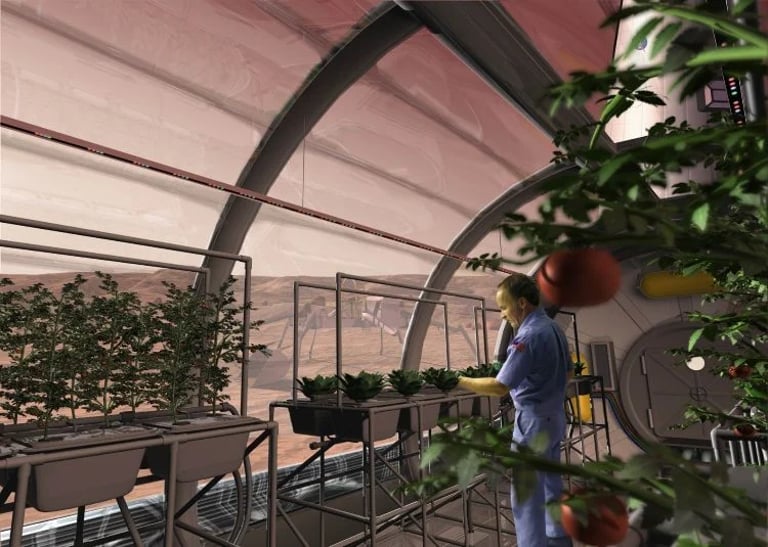

The conclusion suggests that incorporating plant growth–promoting fungi could enhance space crop production and support establishing human settlements beyond Earth, with fungi such as Trichoderma and AMF highlighted as promising options.
Overall, the study remains optimistic about fungi enabling future agriculture on the Moon and Mars, while acknowledging that real-world application requires more research and validation.
Central to the effort is in situ resource utilization (ISRU): using lunar and Martian regolith to grow crops, reducing the need to transport soil from Earth and cutting costs and logistical hurdles.
A focus on nutrient limitations—nitrogen, potassium, and phosphorus—in regolith shows how fungi, especially arbuscular mycorrhizal fungi (AMF), can boost nutrient uptake and plant growth under abiotic stress.
A team of U.S. and Brazilian scientists review the use of beneficial fungi to convert Moon and Mars regolith into soil that can support crops, signaling progress toward space agriculture.
NASA’s Moon to Mars architecture framework underpins ISRU work, including research that uses cyanobacteria with Martian regolith simulants to grow plant matter, illustrating a broad push toward space farming.
The article ends on a hopeful note, urging sustained scientific exploration and continued enthusiasm for space exploration.
Arbuscular mycorrhizal fungi act as extensions of plant roots, enabling access to nutrients and helping plants tolerate the harsh conditions of regolith-based substrates.
Summary based on 1 source