Unveiling SN 1987A: Neutrino Burst Confirms Supernova Theory, Hints at Neutron Star Core
May 29, 2026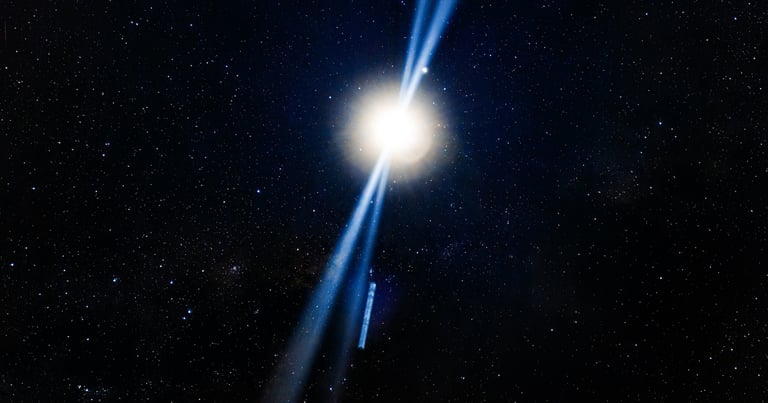

Looking ahead, the remnant continues to expand as Webb and ground-based follow-ups study the central source once debris clears, and while current detectors are highly capable, a nearby supernova is still needed to yield thousands of neutrino events rather than tens.
The event marked the first detection of neutrinos from beyond the Solar System and helped inaugurate neutrino astronomy, with Masatoshi Koshiba’s leadership in Kamiokande contributing to Nobel Prize recognition in 2002.
Recent observations from 2024 with the Webb Space Telescope hint at a newly formed neutron star at the remnant’s core, aligning with SN 1987A’s neutrino origin, though no direct image of the compact object exists yet.
The neutrino burst preceded optical light because neutrinos escape the collapsing core immediately while the shock wave responsible for bright emission takes hours to reach the star’s surface.
The observed neutrino signal matched predictions for core-collapse into a neutron star, supporting collapse models and revealing the explosion’s core processes, with roughly 3 × 10^53 ergs released in neutrinos.
Three underground detectors—Kamiokande-II, IMB, and Baksan—recorded about two dozen neutrinos around 7:35 UT on February 23, 1987, from a star 168,000 light-years away, while a separate five-event burst detected by Mont Blanc hours earlier is generally not attributed to SN 1987A.
A supernova in 1987, SN 1987A in the Large Magellanic Cloud, produced a rare neutrino burst detected underground before visible light, confirming core-collapse supernova theory.
Summary based on 1 source