Solar Sails Near Feasibility for Heliophysics Missions, Eye Interstellar Potential
May 31, 2026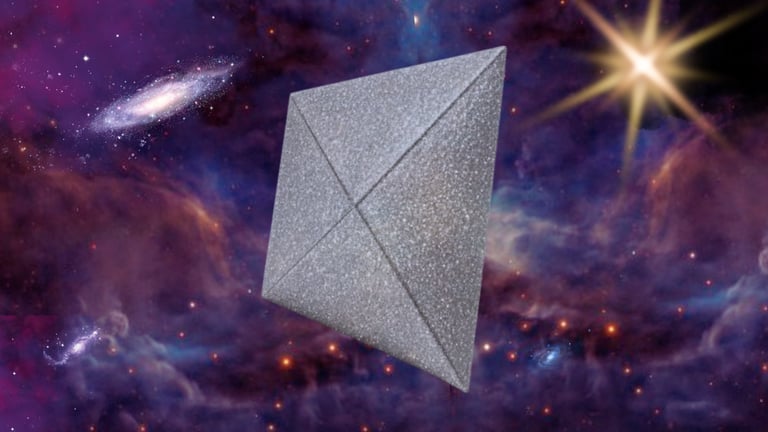

The solar sail field is moving from concept to feasible near-term heliophysics missions, with broader interplanetary and potential interstellar applications hinging on funding, engineering breakthroughs, and prioritization by space agencies.
Researchers are focusing on microns-thick, heat-tolerant membrane materials—such as silicon nitride or titanium nitride—that can survive near-sun conditions while preserving reflectivity and structural integrity.
Deployment and mass constraints remain critical: sails must fold compactly for launch and deploy reliably, backed by lightweight yet strong booms to prevent flutter or collapse in space.
Extreme solar sailing could push sails to speeds around 50 AU per year by diving close to the Sun, but this demands materials capable of withstanding heat up to about 1,000 degrees Celsius.
Longer-range deep-space sails face added hurdles in power generation, communications, and propulsion, with approaches like integrated solar cells on sails and compact high-gain antennas under consideration.
A recent Imperial College London study evaluating missions such as Breakthrough Starshot, Project Svarog, and Solar Cruiser identifies major technology gaps in heat management, sail durability, deployment mechanisms, and attitude control.
There are trade-offs: closer solar approaches yield higher speeds but demand superior thermal protection and larger, more capable sails with dependable deployment systems.
Historical proof-of-concept flights (Lightsail 2, JAXA’s Ikaros) and ongoing lab work establish a foundation, with growing interest in larger, more capable sails.
Solar sails rely on photon pressure from sunlight—and potentially lasers—as a fuel-free propulsion method for future missions.
Near-term missions highlighted include Solar Cruiser and Svarog, with Solar Cruiser planned to launch after fixes to reaction wheels as a practical stepping stone.
Summary based on 1 source
Get a daily email with more Science stories
Source

Space • May 31, 2026
Can solar sails really send humans out into interstellar space?