Compact X-Ray Telescope to Revolutionize Lunar Surface Mapping with Unprecedented Elemental Analysis
June 6, 2026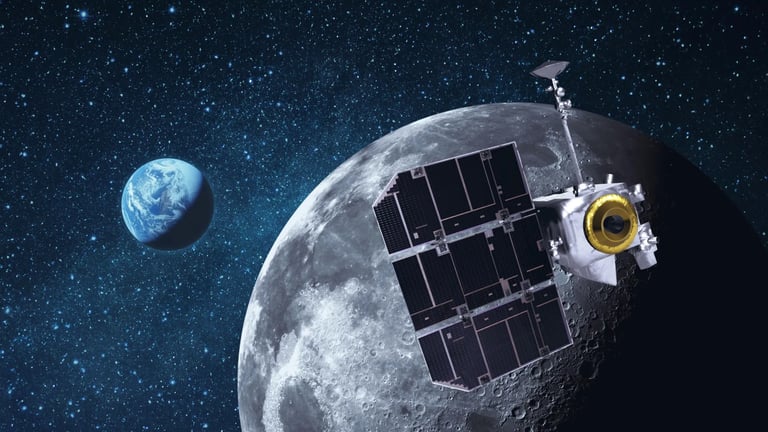

Alternatively, a single Moon-orbiting telescope could map five elements over the entire Moon in about two years on a 70 by 70 kilometer grid.
This concept relies on X-ray fluorescence imaging to identify elemental abundances and leverages lessons from prior lunar missions.
The proposed telescope would weigh under ten kilograms and be built to withstand deep-space radiation, addressing size, weight, and durability challenges of traditional X-ray telescopes.
The research is supported by JSPS KAKENHI Grant Number 21H04972.
The approach aims to overcome data gaps from uneven solar illumination by enabling wide-area, high-resolution imaging during solar activity, potentially yielding the first complete elemental map of the Moon’s surface.
The project uses X-ray fluorescence imaging, detecting elements when solar X-ray radiation excites lunar surface materials to identify elemental abundances, building on Apollo and Chandrayaan insights.
A compact X-ray telescope from a Tokyo Metropolitan University team would map the Moon’s surface chemistry from lunar orbit, with the goal of revealing how the Moon formed, changed, and evolved, and to enable full-coverage elemental analysis without sample return missions.
Simulations show that a single compact telescope could map five elements across the Moon on a 70 by 70 kilometer grid in a little over two years; a 25-telescope array could shorten this to about one year and add sodium with a 30 by 30 kilometer grid.
A larger five-by-five detector array could complete the same mapping in about a year and extend the map to include sodium, achieving a finer 30 by 30 kilometer grid thanks to higher resolution and shorter mission duration.
Researchers stress that this method would complement, not replace, sample-return missions, and it aligns with NASA’s Artemis program pursuing human lunar return.
If realized, the mission would deliver the first complete elemental abundance map of the Moon, offering new insights into lunar geology and its formation and evolution.
Current lunar maps are incomplete due to limited sunlight-driven X-ray signals and detector degradation, with polar regions especially challenging; a full global map would fill critical geochemical knowledge gaps.
Summary based on 2 sources
Get a daily email with more Science stories
Sources

Audacy • Jun 6, 2026
New X-ray telescope can tell us exactly what’s on the moon
ScienceDaily • Jun 6, 2026
Tiny X-ray telescope could unlock the Moon's hidden chemistry