Ancient Interstellar Comet 3I/ATLAS Reveals Secrets of Distant Planetary Systems
June 22, 2026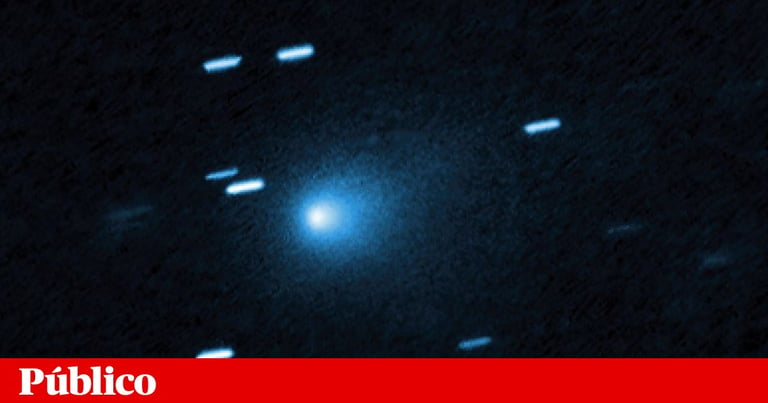


A newly studied interstellar comet, 3I/ATLAS, passed through the inner solar system, and its isotopic fingerprints indicate it is among the oldest objects observed, dating back roughly 10 to 12 billion years after the Big Bang.
3I/ATLAS stands out for its brightness among interstellar visitors, enabling isotopic work that was not possible with earlier visitors like ‘Oumuamua or Borisov, though its exact origin in the Milky Way remains uncertain.
The research appears in Nature on June 22, 2026, with context from NASA’s Webb program and international partners (ESA and CSA).
Complementary work, including an arXiv study, cites NASA/ESA/CSA collaboration using Webb and supporting telescopes to deepen the chemical inventory of 3I/ATLAS.
These findings help scientists compare interstellar material with Solar System bodies to understand how other planetary systems form and how common habitable-like conditions might be elsewhere.
The study highlights the potential for prebiotic chemistry in other systems, using 3I/ATLAS’s chemical fingerprints as a window into environments where life's building blocks could arise.
Astronomers anticipate detecting more interstellar objects in coming years, with facilities like the Vera C. Rubin Observatory and future missions expanding this new field of study.
The discovery implies many interstellar visitors exist, and upcoming surveys and missions will likely reveal more objects from other star systems.
There is no evidence of extraterrestrial technology; NASA and SETI emphasize natural explanations for the comet’s properties.
JWST analyses reveal a chemical and isotopic makeup that points to formation in a much colder, low-metallicity environment than the early solar system.
Chemical fingerprints suggest the interstellar comet originated in a distant planetary system and preserved conditions favorable to complex chemistry, offering a glimpse into another galaxy’s protoplanetary environment.
Researchers caution that this is just the beginning of interstellar-object science, with future opportunities driving deeper exploration.
Summary based on 9 sources
Get a daily email with more World News stories
Sources

Yahoo News • Jun 22, 2026
Interstellar comet 3I/ATLAS found to be up to 12 billion years old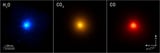
NASA Science • Jun 22, 2026
NASA’s Webb Finds Clues to Ancient, Distant Origin of Comet 3I/ATLAS - NASA Science
The Guardian • Jun 22, 2026
Interstellar comet may be oldest object seen in our solar system, scientists say