New Catalogue Reveals Over 7,000 Ancient Galaxy Clusters, Unlocking Cosmic Secrets
July 9, 2026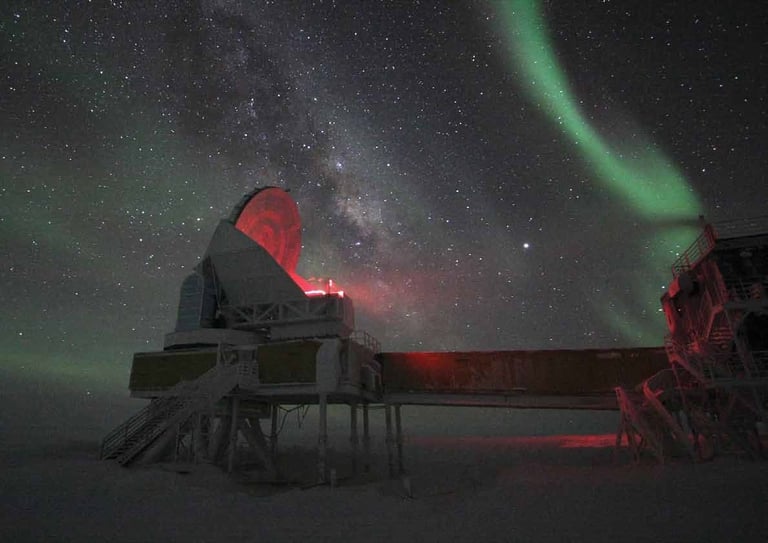

From roughly 8,892 candidate clusters detected across about four percent of the sky, 7,190 were confirmed with optical and infrared data from the Dark Energy Survey, including a notable share of newly identified objects and a sizable portion representing first-time detections of hot gas.
The catalogue is poised to unlock new research opportunities, with upcoming confirmations from the Vera C. Rubin Observatory and the Euclid mission, setting the stage for refined understanding of how the universe evolved into its current clustered structure.
An unexpected finding shows a marked rise in dust-related emission in clusters farther back in time, indicating evolving star formation activity around these giant systems across cosmic history.
Many clusters date to more than 7.8 billion years ago, offering insights into cosmic structure when the universe was younger and enabling studies of dark matter, dark energy, and structure formation.
A team led by Argonne National Laboratory published a new catalogue of over 7,000 galaxy clusters identified from five years of observations with the South Pole Telescope using the Sunyaev–Zeldovich effect on the cosmic microwave background.
The project involved extensive validation to ensure detections are robust, highlighting the work of researchers such as Kayla Kornoelje and underscoring the catalogue’s reliability for future cluster cosmology studies.
The SPT 3G upgrade, with sixteen thousand detectors, enabled sensitive detections of clusters by capturing distortions in the CMB as light passes through hot gas and dark matter within clusters.
Summary based on 1 source
Get a daily email with more Space News stories
Source
Universe Today • Jul 8, 2026
7,000 Galaxy Clusters, Hiding in Plain Sight