Roman Space Telescope to Enhance Asteroid Tracking and Risk Assessment
August 5, 2026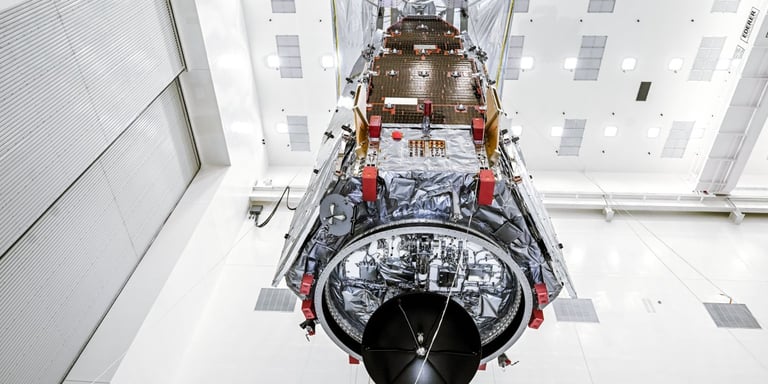


Researchers say Roman’s infrared observations can help determine asteroid trajectories, sizes, and compositions, complementing JWST and ground-based telescopes, and aid in prioritizing follow-up observations for potentially hazardous objects.
Roman’s ability to view from multiple angles, alongside NEO Surveyor and the Vera Rubin Observatory, can improve orbital determinations and risk assessments, speeding up necessary follow-up studies.
The Nancy Grace Roman Space Telescope, though primarily built for cosmology, is set to launch from Kennedy Space Center later this summer to study dark energy, dark matter, and the large-scale structure of the universe.
The broader context notes tens of thousands of potentially hazardous asteroids remain undiscovered, and precise data is crucial to decide when to act to prevent possible impacts, even if most objects are benign.
Roman is not the primary planetary defense tool, but it could significantly bolster global efforts to locate, characterize, and track potentially dangerous asteroids while advancing its main cosmological science goals.
The plan includes coordinating with other missions, notably NEO Surveyor, which is slated for 2027 launch and will search from a sunward infrared position, enabling better size measurements and risk assessments.
Beyond its core mission, Roman could play a meaningful planetary-defense role with a 300-megapixel infrared camera and wide field of view capable of monitoring large sky areas and detecting small bodies around 60 feet long.
Summary based on 1 source
Get a daily email with more Tech stories
Source

MIT Technology Review • Aug 5, 2026
NASA’s new dark energy space telescope can also detect killer asteroids