NASA's Roman Space Telescope Set for 2026 Launch, Aims to Unveil Dark Universe Secrets
August 30, 2026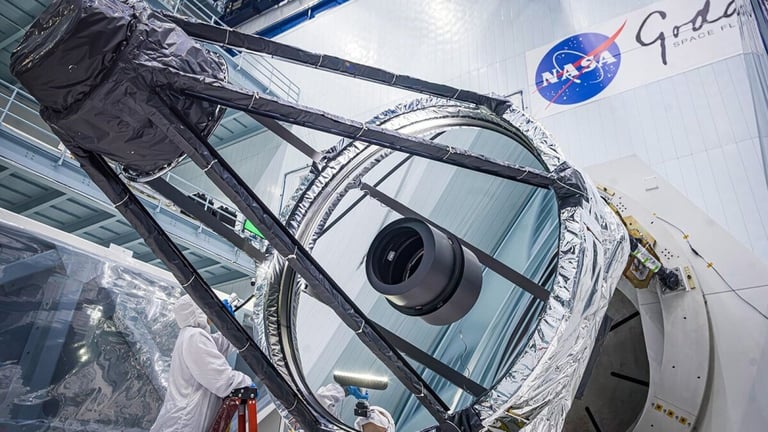

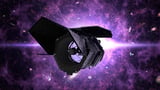
The Nancy Grace Roman Space Telescope is NASA’s next major observatory, designed to discover exoplanets and investigate dark energy and dark matter, building on the legacy of Hubble and Chandra.
Roman will complement the James Webb Space Telescope and ESA’s Euclid, providing data to help address fundamental questions about dark matter and dark energy.
With a high survey speed and sharp, wide-field imaging, Roman is expected to yield broad scientific returns across exoplanet science, dark matter, dark energy, and related astrophysical phenomena.
The telescope will operate at L2, about a million miles from Earth, with a three-month commissioning period and first images anticipated in early 2027.
Ahead of launch, NASA Ames invites media to interview subject-matter experts about Roman, as the mission gears up for its August 30, 2026 launch from Kennedy Space Center.
Coverage of the launch includes photography documenting the rocket and booster recovery.
Politically, the mission faced earlier funding opposition, but Congress funded Roman, and a post-launch briefing featured President Trump praising the mission and Jared Isaacman.
A notable post-launch moment included a presidential call praising Roman, reflecting sustained political support for space science despite prior budget-cut discussions.
The report notes a wide range of headlines and durations across topics, indicating a non-narrative feed rather than a single cohesive story.
Without substantive article content detailing the launch, significance, specifications, or outcomes, a meaningful summary cannot be produced from the provided text.
A Falcon Heavy booster was shown returning to Landing Zone 40, illustrating the rocket’s reusable design.
Roman’s mission is expected to extend beyond its five-year baseline to a full decade, aided by efficient fuel use and precise trajectory that reduce mid-course adjustments.
Summary based on 8 sources
Get a daily email with more Science stories
Sources
NASA • Aug 30, 2026
NASA Ames Experts Available for Roman Space Telescope Interviews - NASA
Space • Aug 31, 2026
What's next for NASA's just-launched Roman Space Telescope?
Scientific American • Aug 31, 2026
What’s next for NASA’s new Roman Space Telescope?