Space Race 2.0: Mega-Constellations Spark Debate on Night Sky Preservation and Future Tech
September 6, 2026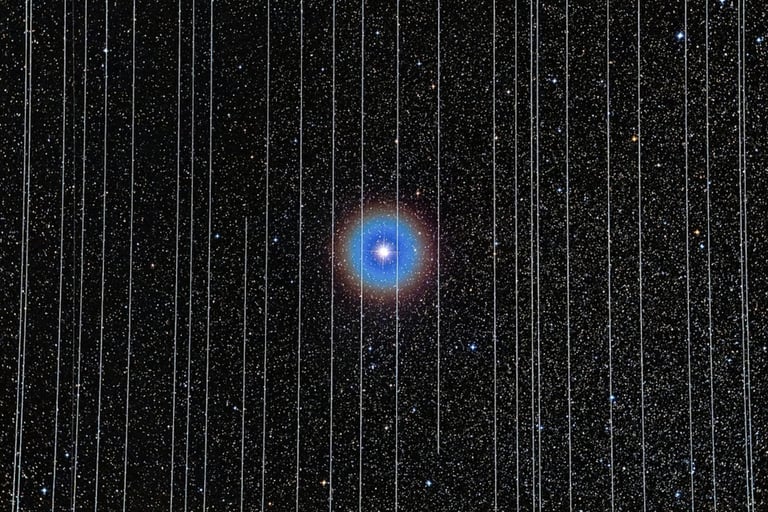

A dramatic surge in space activity is reshaping the night sky as active satellites and megaconstellations, led by SpaceX's Starlink, aim to deliver global high-speed internet and related services.
Tech firms and space agencies are exploring orbital computing as a next-gen data-center model, leveraging continuous solar power and favorable thermal dynamics for AI workloads.
The piece presents a crossroads between building a space-enabled utopia and preserving humanity’s ability to gaze at the stars.
Elon Musk announced plans for a massive $100 billion launch facility in Louisiana to support the million-satellite constellation, enabling thousands of launches per year and potentially one per hour.
The mega-constellation is framed as addressing terrestrial data-center constraints such as land scarcity, rising electricity demand, and local resistance to water and power use.
Experts warn that without sustainable design, satellite proliferation could raise debris risks, hinder launches, and permanently alter the night sky into a crowded data infra landscape rather than a celestial canvas.
Last year saw a record surge of space launches, with thousands of objects—mostly comms satellites—filling low Earth orbit and contributing to crowding.
The rapid rise in orbital objects is prompting calls for international coordination to protect low Earth orbit, addressing debris, emissions, and sky visibility.
As of September 2026, about 16,500 active satellites orbit Earth, with plans to potentially unleash up to a million SpaceX satellites to power AI processing, per an FCC filing by SpaceX and xAI.
The overall outlook suggests a near-future where space activity accelerates dramatically, with broad implications for astronomy, space safety, and how we observe the night sky.
Regulators are weighing competing visions, highlighting the debate between expansive space-based tech and preserving the night sky and long-term space environment.
SpaceX argues that near-constant solar-powered spacecraft could become scalable compute infrastructure, potentially advancing humanity toward Kardashev-like solar-power exploitation in space.
Summary based on 2 sources
Get a daily email with more Space News stories
Sources

The News International • Sep 6, 2026
Elon Musk, SpaceX eyes 1 million satellites for orbital data centers
The Independent • Sep 6, 2026
A million satellites are heading to space. They could change the night sky forever