SpaceX Set for High-Stakes Starlink V3 Satellite Launch with Orbital Milestone in Sight
September 22, 2026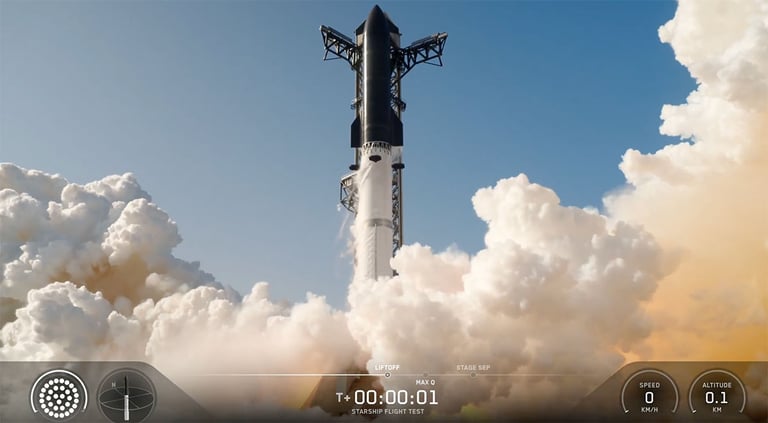

Flight 14 aims to reach orbit and deploy SpaceX’s upgraded Starlink Version 3 satellites for the first time, with Ship 41 carrying 26 Starlink V3 satellites.
The launch is planned for late September from SpaceX’s Starbase in Texas, with a 75-minute launch window and a live stream on SpaceX’s site and X profile, plus backups in following days.
A successful orbital flight would advance Starship’s role in NASA’s Artemis program and SpaceX’s broader goal of multigenerational, multiplanetary space travel, while a failure could delay Moon missions and Mars plans.
Key technical challenges include engine performance, stage separation, thermal protection during reentry, vehicle recovery, and rapid reuse, with in-orbit refueling critical for longer missions.
Full orbital operations would also require orbital refueling and cryogenic propellant storage in space, necessitating tanker launches to replenish propellants for extended missions.
Heatshield testing continues with upgrades and new retention mechanisms for tiles and curved-tile designs to mitigate heating in gaps, informed by Flight 13 data.
Coverage will be available via Space Coast Daily TV and live updates on the Space Coast Daily X account, with the schedule described as dynamic.
Mission upgrades include hardware and software improvements to engine filtering and relight reliability, addressing issues seen on the prior flight.
The mission carries notable risk, including the possibility of losing contact, with a flight path designed to prioritize passive safety and minimize ground risk.
Achieving an orbit requires sustained horizontal velocity in addition to altitude, making it a more complex milestone than simply reaching space.
Starlink’s current network has about 9,800 active satellites, predominantly V2, with very high downlink and uplink capabilities, leading to congestion and evolving plan needs.
Two heatshield tiles recovered from Ship 40 are slated for refloat on Ship 41, marking the first tile reuse for Starship.
Summary based on 10 sources
Get a daily email with more Space News stories
Sources

PCMag Australia • Sep 22, 2026
No Pressure: A Massive Starlink Upgrade Hinges on SpaceX's Next Starship Launch
PCMag UK • Sep 22, 2026
No Pressure: A Massive Starlink Upgrade Hinges on SpaceX's Next Starship Launch
Space Coast Daily • Sep 23, 2026
Starship’s 14th Flight Test Set for Monday, September 28 – Watch Live on Space Coast Daily!
The Independent • Sep 23, 2026
Elon Musk’s Starship megarocket is heading to orbit for the first time. Here’s how to watch