NASA's Roman Space Telescope Poised to Revolutionize Exoplanet Imaging with Advanced Coronagraphy
September 23, 2026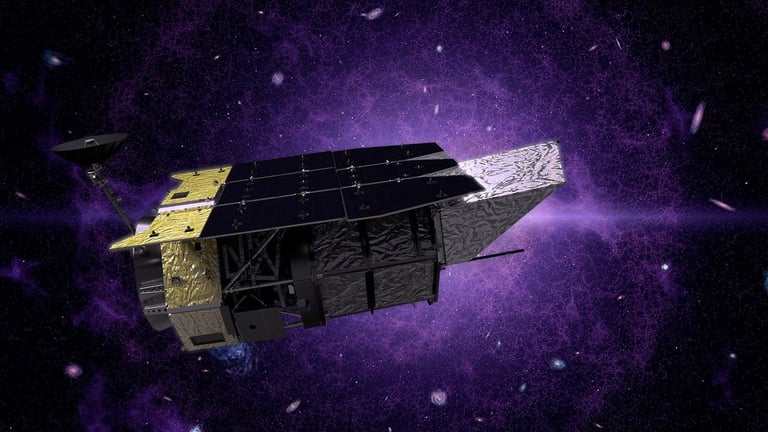

NASA’s Nancy Grace Roman Space Telescope is testing a new CGI coronagraphic technique to directly image exoplanets by suppressing starlight with advanced coronagraphy and active wavefront control.
The mission is planned for a five-year primary phase, with fuel-saving opportunities that could extend operations to at least 22 years.
Adler Planetarium will serve as a local hub for engaging with the telescope’s future discoveries as data streams begin to surge.
Key scientific questions include the nature of dark matter and dark energy, along with the abundance and distribution of exoplanets.
The project emphasizes extreme mechanical stability through Precision Alignment Mechanisms to maintain optics with minimal tilt for high-contrast imaging.
Roman launched from Kennedy Space Center on an August morning and is en route to the Sun-Earth L2 point, with arrival and commissioning anticipated by early December.
The telescope is expected to enable discoveries spanning tens of thousands of exoplanets, hundreds of millions of galaxies, and billions of stars across the Milky Way.
MPIA is a key partner contributing hardware, software processing, and data analysis, with NASA’s CPP coordinating international data collection; data will be publicly released after processing.
During commissioning, CGI systems are being powered on and calibrated, with first science images expected in early 2027.
If successful, CGI could image older, cooler gas giants close to their stars and pave the way for future observatories to image Earth-like planets.
CGI employs two deformable mirrors with thousands of actuators to reach a contrast of up to a billion-to-one between star and planet.
Adler Planetarium showcases the project through the Other Worlds exhibit, live dome shows, and citizen-science via Adler Zooniverse.
Summary based on 2 sources
Get a daily email with more Space News stories
Sources

SciTechDaily • Sep 23, 2026
NASA’s New Space Telescope Could Bring Alien Worlds Into View Like Never Before
Adler Planetarium • Sep 24, 2026
What’s so cool about the Nancy Grace Roman Space Telescope? - Adler Planetarium