Star Catcher Gears Up for Groundbreaking Space Power-Beaming Mission with $88M Boost
September 28, 2026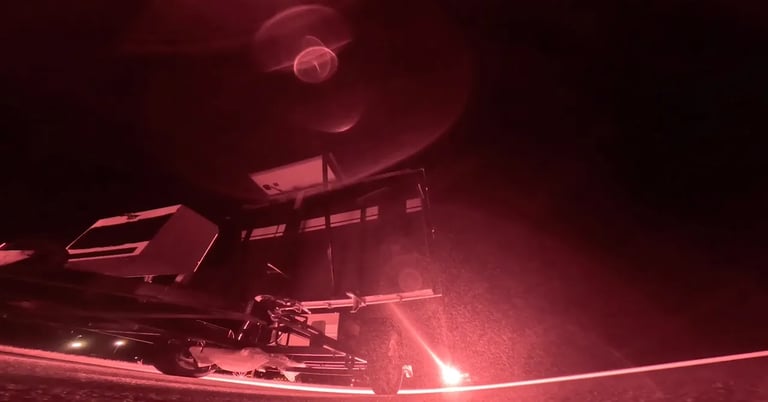


Star Catcher is testing a wireless power transmission in space through Protostar, a prototype that beams concentrated laser energy from a primary host spacecraft to a nearby CubeSat in Earth orbit.
Protostar is set to launch aboard a SpaceX Transporter-18 mission with an expected NET date in early October.
The Jacksonville, Florida startup aims to generate solar power in space and transmit it to satellites via laser beams, with the initial demonstration targeting an untethered CubeSat.
Industry-wide, leaders argue that expanding space infrastructure could lower costs and unlock a larger, more capable orbital economy, including reusable launch vehicles.
The push for alternative power delivery methods grows as current and upcoming missions demand more capable equipment beyond traditional solar panels.
Increased power availability could extend satellite uptime and enhance sensors, communications gear, and on-board computing.
Aaron Leong is cited as the author referenced in the piece.
The mission will navigate challenges in alignment, efficiency, heat, safety, and policy, and will run in a broader context with parallel efforts from Caltech, ESA SOLARIS, and projects in China and the U.K.
An orbital power-grid concept envisions on-demand power delivery, potentially transforming space operations and the economics for satellite operators.
Broader context notes European space startups gaining traction and a Rocket Lab acquisition of Iridium, signaling scale and consolidation in the space sector.
The Pentagon’s DIU seeks near-term power-beaming demonstrations for space-to-space and space-to-ground operations by FY30, with DoD contracting signaling defense interest in orbit power beaming.
The test aims to validate tracking, precision pointing, and safety control across orbital distances without requiring client spacecraft to redesign or carry heavy receivers.
Summary based on 4 sources
Get a daily email with more Tech stories
Sources

WIRED • Sep 28, 2026
Space Lasers Are About to Get Their First Real Test Generating Energy
Payload • Sep 28, 2026
Star Catcher’s Orbital Power-Beaming Demo is Ready for Launch
Softonic EN • Sep 28, 2026
Star Catcher targets a 2026 space power-beaming test: laser energy between satellites