SpaceX Poised for Growth as Hyperscalers Pursue Orbital AI Experiments
October 10, 2026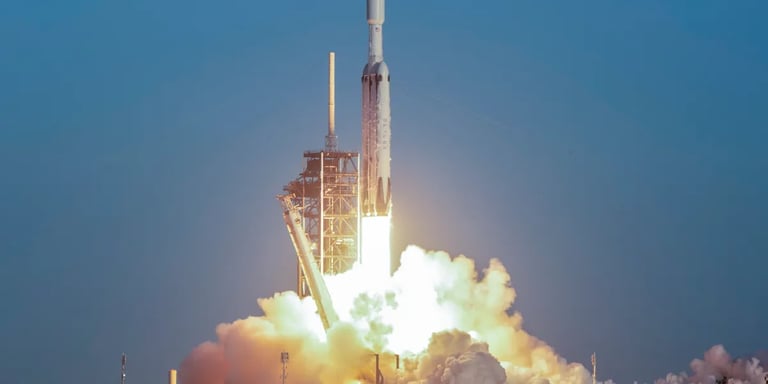

SpaceX stands to benefit as multiple hyperscalers pursue orbital AI, using SpaceX launch services to meet rising demand for orbital experiments.
As the dominant launch platform, SpaceX could gain from broader orbital AI activity, given its ongoing interest in space-based AI infrastructure.
Whether Google, Nvidia, or another hyperscaler leads orbital computing, SpaceX could see increased launch demand as more players test orbital AI.
Ground tests show Trillium TPUs withstand radiation levels higher than a five-year mission, but heat management in vacuum remains a key challenge, driving exploration of heat pipes and radiators.
Vibration testing for Trillium TPUs has been successful, yet the vacuum environment makes thermal management the main hurdle, prompting development of advanced cooling solutions.
Project Suncatcher’s first prototype satellite rode SpaceX’s Transporter-18 mission on October 1, 2026, in partnership with Planet, to study how TPUs handle radiation, temperatures, and launch vibrations in low Earth orbit.
The test satellite, launched with SpaceX on Transporter-18 in October 2026 with Planet, will evaluate TPU resilience in radiation, extreme temperatures, and launch stresses in LEO.
The current effort is engineering-focused and not meant to demonstrate a commercial system yet, prioritizing data collection on hyperscaler hardware performance in space.
Industry context includes SpaceX and Blue Origin proposals for large satellite data-center networks, alongside Google’s earlier Suncatcher efforts exploring solar-powered, interconnected TPU chip networks.
Experts remain cautious about orbital data centers, acknowledging potential compute solutions but noting significant obstacles and uncertain timelines for practical viability.
Google envisions linking satellites with laser links to form orbital computing clusters, planning a two-satellite test in 2027 to advance toward broader orbital AI infrastructure.
Google aims to deploy two additional satellites in 2027 to test laser communication between satellites, a key step for orbital data-center networks, while current missions focus on engineering data.
Summary based on 3 sources
Get a daily email with more Space News stories
Sources


Yahoo! Finance • Oct 10, 2026
Google’s Orbital TPU Test: Why SpaceX Wins No Matter Which Hyperscaler Gets There First
Insider Monkey • Oct 10, 2026
Google’s Orbital TPU Test: Why SpaceX Wins No Matter Which Hyperscaler Gets There First