Revolutionary FLIP Framework Enhances Telescope Imaging to Detect Distant Planets
November 4, 2026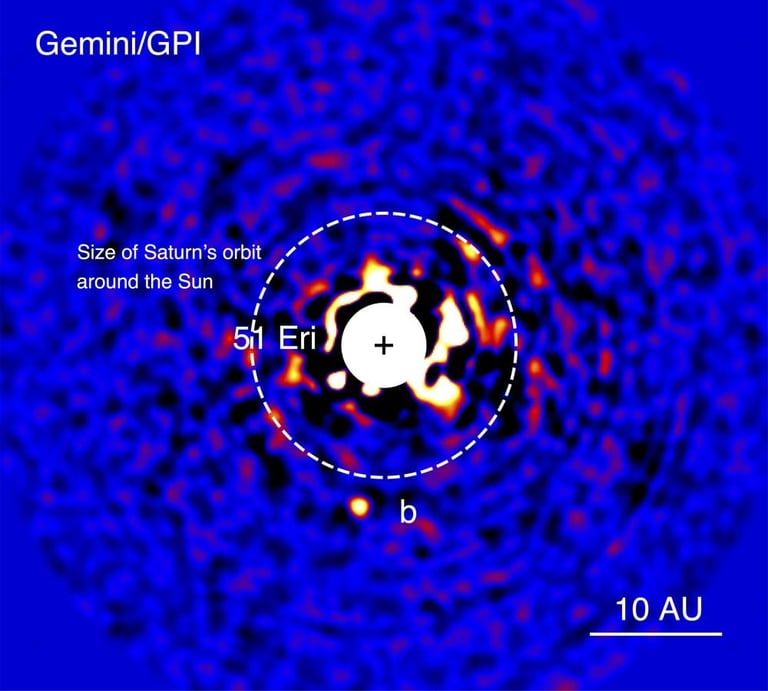


Researchers have developed Physics-based Learning for Imaging Planets (FLIP), a framework that combines a telescope physics model with machine-learning optimization to subtract starlight from telescope images.
FLIP builds a digital twin of the telescope to capture nanoscale instabilities and wavefront variations, enabling improved PSF fidelity and more effective starlight removal.
The approach not only reanalyzes existing data but also aims to enable detection of smaller, colder, and fainter planets while potentially influencing the design and operation of future observatories like NASA’s Habitable Worlds Observatory by correcting optical imperfections rather than relying solely on engineering stability.
The briefing includes DOI links, licensing notes (CC BY 4.0), and download references for further exploration.
Key figures quoted underscore the method’s potential impact and practicality, including Sasha Hinkley of the University of Exeter and Bruce Macintosh of UC Observatories.
The work was published in Nature in 2026, with DOI 10.1038/s41586-026-11213-z.
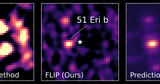
Tests used Webb observations of HIP 65426 and 51 Eridani, plus a control star TY C 5899 with no known planets, to validate the approach and show performance gains.
The study demonstrated consistency across observations by applying the method to stars with known exoplanets and a non-planetary star.
Tests showed sensitivity improvements ranging from two to 15 times over conventional starlight subtraction techniques.
The briefing references the Nature paper Imaging exoplanets below the telescope stability limit by Ferrer-Chavez et al. (Nature 659, 58–62, 2026) as the foundation.
Future directions include refining detector models, disentangling parameter degeneracies, reducing computation, and applying FLIP to a broader range of facilities and wavelengths.
References and related articles include the primary paper and other exoplanet imaging developments, such as JWST imaging and Roman telescope news.
Summary based on 9 sources
Get a daily email with more Tech stories
Sources
CBS Chicago • Nov 4, 2026
Northwestern astrophysicists develop method for detecting distant planets in space telescope images
AAAS logo • Nov 4, 2026
Astronomers sharpen JWST’s view of distant worlds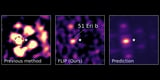
Scientific American • Nov 4, 2026
NASA’s James Webb Space Telescope is wobbly—scientists have a fix that could reveal new alien worlds