SpaceX's Starship Achieves First Successful Orbital Flight, Deploys 26 Starlink V3 Satellites
November 6, 2026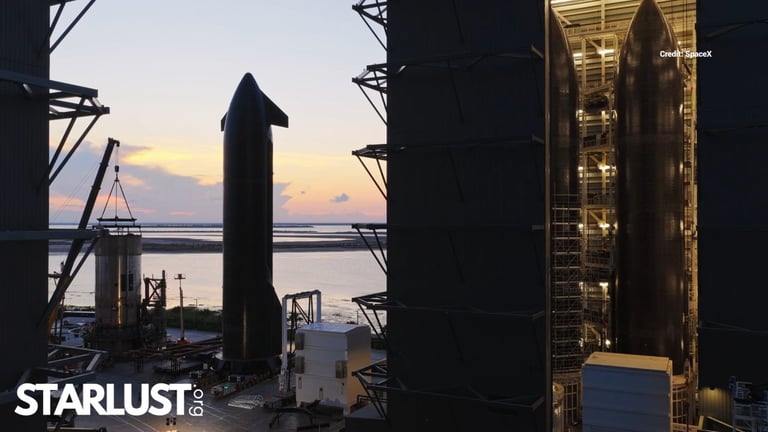

Starship Flight 14, conducted on September 28, 2026 from Starbase, Texas, marked Starship’s first operational mission by delivering a real payload of 26 Starlink V3 satellites to orbit and achieving the first orbital insertion.
The mission launched from Starbase, Texas, on September 28, 2026, and included Starship’s first-ever deorbit burn with a splashdown in the Pacific Ocean.
During ascent, one Raptor engine on the Super Heavy booster and a Raptor vacuum engine on the upper stage cut out early, yet the flight completed orbit insertion and deployed the 26 next-generation Starlink V3 satellites.
SpaceX released Episode 4 of its Starship documentary series, Go For Orbit, providing a behind-the-scenes look at Flight 14.
The mission saw the Super Heavy booster perform a boostback maneuver before splashing down in the Gulf of America, while no recovery of vehicles was attempted on this flight.
Video credit for the mission goes to SpaceX.
SpaceX published the footage and materials associated with Flight 14 as part of its ongoing communications.
Flight 15 is scheduled for November 13, 2026, with an aim to attempt the first-ever catch of the Starship upper stage by the launch tower’s mechanical arms, potentially completing the full reusable system.
Flight 14 represents Starship’s first successful orbital flight.
The mission included Starship’s first deorbit burn and atmospheric reentry of the upper stage, culminating in a Pacific splashdown.
The Super Heavy booster executed a boostback burn and landed in the Gulf of Mexico; no vehicle recovery was attempted on this mission.
Starship stands about 124 meters tall and 9 meters in diameter; in its fully reusable configuration, it targets 100–150 tonnes to LEO, with Flight 14 carrying 26 satellites and future missions aiming for 40–60 V3 satellites.
Summary based on 2 sources
Get a daily email with more Space News stories
Sources

BASENOR • Nov 6, 2026
Starship Flight 14: 6 Details That Defined the Mission
Starlust • Nov 6, 2026
Key moments from SpaceX’s Starship Documentary Episode 4: BTS of Flight 14