Skyroot Becomes India's First Spacetech Unicorn with $60M Funding, Eyes Vikram-1 Launch
May 7, 2026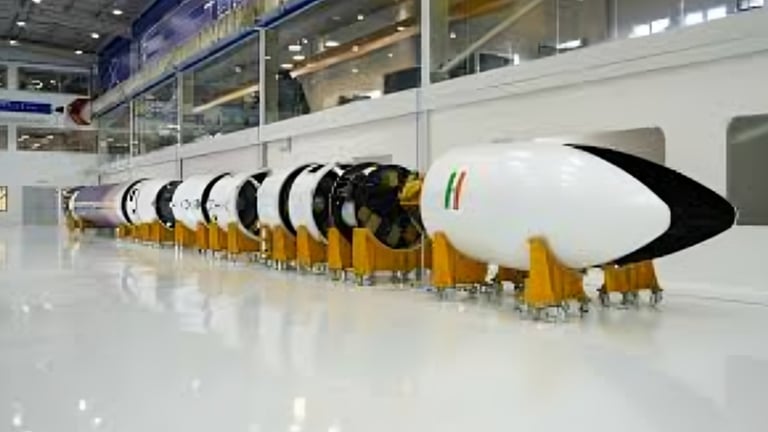


Skyroot Aerospace has raised $60 million at a $1.1 billion pre-money valuation, solidifying its status as India's first spacetech unicorn as it readies Vikram-1 for a June-private orbital launch.
The round, co-led by Sherpalo Ventures and GIC, includes investors such as BlackRock, Greenko founders, Arkam Ventures, Playbook Partners, and the Shanghvi Family Office, among others.
The funding will scale Skyroot’s manufacturing, increase Vikram-1 launch cadence, and advance Vikram-2, a heavier-lift vehicle targeted for debut in 2027.
Ram Shriram’s involvement mirrors his early Google days, combining strategic mentorship and board participation, underscoring access to space as a major global challenge.
Shri Ram Shriram’s investment reflects a preference for long-horizon, infrastructure-heavy tech ventures over consumer trends, aligning with his history in Google and related tech bets.
Market context shows rising demand for small-satellite launches, with Skyroot’s cost-to-performance edge and a supportive regulatory environment helping private space players grow.
Shri Ram Shriram stresses access to space as a critical hurdle and commends Skyroot’s improving cost-to-performance and progress toward the next launch.
The broader article notes industry commentary and links to related pieces, but the core focus remains Skyroot’s unicorn status, funding, and roadmap.
Shri Ram Shriram’s personal background: born 1957 in Chennai, educated at Loyola College and University of Michigan, now based in Menlo Park, with a family involved in tech ventures.
Competition is intense domestically with Agnikul Cosmos and globally with SpaceX, Rocket Lab, Relativity Space, Axiom Space, and Stoke Space, pressuring Skyroot to prove commercial viability.
If Vikram-1 proves successful, Skyroot’s unicorn status would be validated; otherwise delays could pose investor risks, given a tight six-week window to launch.
Space ventures demand patient capital, sustained funding, deep engineering, and supportive regulation, contributing to the historically selective launch and rocket-making landscape.
Summary based on 12 sources
Get a daily email with more Startups stories
Sources

TechCrunch • May 7, 2026
India’s first space tech unicorn emerges as Skyroot gears up for orbital launch
Economic Times • May 7, 2026
Ram Shriram's Sherpalo Ventures to lead $60 million funding round in Skyroot
The Next Web • May 7, 2026
Skyroot becomes India’s first space-tech unicorn ahead of June Vikram-1 launch
SpaceNews • May 7, 2026
Skyroot raises $60 million ahead of first orbital launch attempt