Odyssey Unveils Odyssey-3: A Game-Changing AI Model for Robotics and Autonomous Systems
October 8, 2026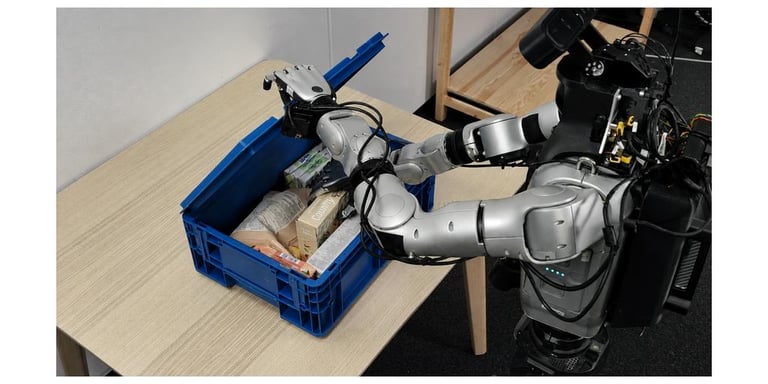

Odyssey launches Odyssey-3, its most powerful world model to date, with the aim of enabling general-purpose intelligence capable of understanding, predicting, and interacting with both physical and virtual environments.
Odyssey-3 demonstrates capabilities across six domains: robotics with multi-arm control and recovery behaviors; humanoids with real-time control policies via Flexion; autonomous driving on Indian roads using about 20 hours of simulated data; AI training by generating interactive environments; indoor aerial navigation with drones using simulated data; and gaming, including playing Grand Theft Auto V with early transfer to other titles without extra policy training.
The model is trained on a large visual dataset and learns representations of physics, dynamics, cause and effect, and human behavior to apply across domains.
Musk did not provide video, a release date, or specific scores, and neither Tesla nor SpaceXAI has published gaming results yet.
The AI is expected to run on Tesla’s AI4 computer, the same chip used in Tesla vehicles, estimated at about $650.
As of October 10, 2026, Elon Musk reported that Digital Optimus can play through about half of the Diablo campaign and shows competitive skill in Counter-Strike, with League of Legends training underway.
Musk said Digital Optimus is performing well in fast-paced games like Counter-Strike, with League of Legends training in progress as part of ongoing gaming progress.
Elon Musk announced that Tesla’s Digital Optimus AI can now play roughly halfway through Diablo’s campaign by simply looking at the screen, emulating human play.
Related articles and background context are provided, including links to Tesla and xAI initiatives and prior announcements about the project and hardware plans.
Games serve as a training ground because they are cheap, repeatable, and provide real-time visual decision-making challenges, though generalization to non-gaming software remains unproven.
Future milestones to watch include results on League of Legends, evidence of broader software transferability, and production scale of Optimus units toward 1,000 per week.
The approach emphasizes pixels-in, no privileged access, making the agent’s abilities potentially transferable across different software interfaces.
Summary based on 7 sources
Get a daily email with more Startups stories
Sources


TNW | Artificial-intelligence • Oct 8, 2026
Odyssey-3 drives a car in India and runs humanoids from one world model
Robotics & Automation News • Oct 8, 2026
Odyssey launches world model to control robots, humanoids, vehicles and drones