1.75-Billion-Year-Old Fossils Unearth Oldest Evidence of Photosynthesis
January 4, 2024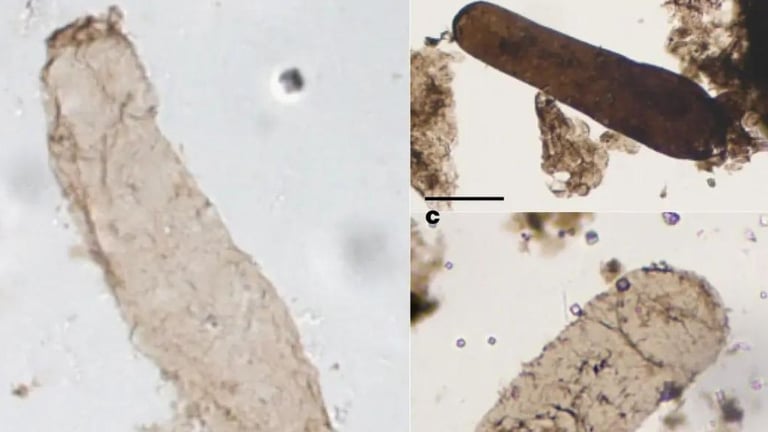

A recent study has discovered 1.75-billion-year-old microfossils, known as Navifusa majensis, with the oldest evidence of photosynthetic structures.
These fossils were found in Australia, the Democratic Republic of the Congo, and the Canadian Arctic.
They reveal the presence of thylakoids, membrane-bound structures in chloroplasts of plants and cyanobacteria, extending the fossil record of internal membranes by 1.2 billion years.
The findings suggest photosynthesis may have evolved over 1.75 billion years ago, earlier than previously believed.
It is yet unclear if this evolution occurred before or after the Great Oxidation Event.
The study emphasizes the importance of the fossil record in understanding the evolution of photosynthesis and its impact on Earth's chemistry.
The discovery also provides insights for the search for life on other planets.
Summary based on 0 sources