French PM Faces No Confidence Votes Amid Political Crisis; Economic Reforms in Jeopardy
December 6, 2024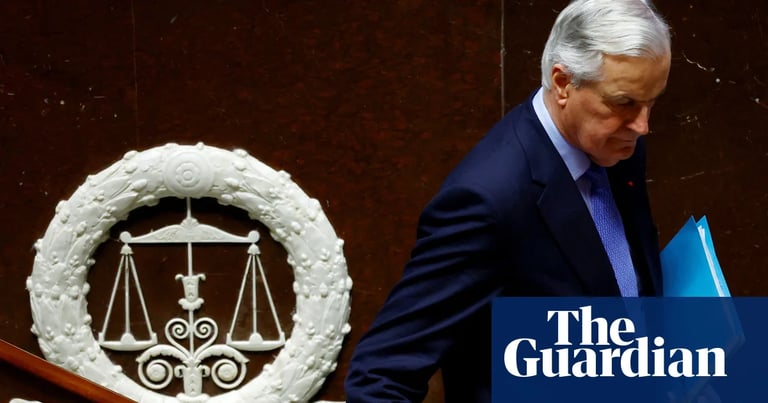


France's political landscape is poised for a significant shift as far-right and left-wing forces unite to vote on a historic no-confidence motion against Prime Minister Michel Barnier's government, a move that could result in its ousting for the first time in over six decades.
In light of the challenging fiscal and financial circumstances facing the country, Barnier acknowledged that he has only been in office for three months.
President Macron, in a somewhat ironic tone, referenced the reopening of Notre-Dame cathedral as a symbol of resilience amidst the destruction it faced.
The ongoing restoration of Notre-Dame aims to blend old and new elements, preserving historical craftsmanship while replacing certain features.
Funds raised for the restoration have exceeded costs, with surplus money allocated for the conservation of salvaged parts and archaeological finds.
Despite the challenges, many women involved in the restoration express deep satisfaction in contributing to the cathedral's rebirth and the preservation of its historical significance.
Concerns have been raised regarding the chemical treatments used during restoration, particularly the presence of volatile organic compounds (VOCs) that can pose health risks.
There is a collective call for long-term monitoring of lead exposure for workers and residents, as health effects may surface long after exposure.
Barnier emphasized that addressing the economic reality requires difficult financial proposals rather than simply distributing funds that the government does not have.
The public and global community have responded emotionally to the restoration efforts, highlighting a collective sense of hope and determination.
Controversies surrounding the renovation have emerged, particularly regarding budget control, donor influence, and the design of stained-glass windows.
As Notre-Dame prepares to reopen, the Catholic Church faces the challenge of balancing the potential for increased visitors with concerns about the commodification of its sacred space.
Summary based on 0 sources