AI-Powered Plant Roots Could Revolutionize Carbon Capture: Salk Institute's Breakthrough
April 25, 2024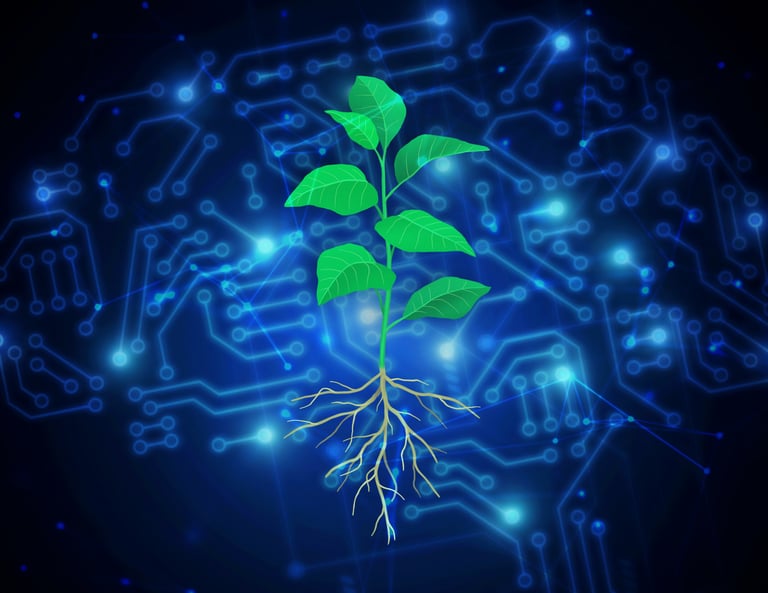


Salk Institute scientists are employing AI software, SLEAP, to enhance plant root systems for better carbon dioxide capture and storage.
The software, SLEAP, is now tailored for plant studies with a toolkit named sleap-roots, improving the measurement of root characteristics such as depth, mass, and growth angle.
SLEAP's toolkit has proven to be faster and more accurate than previous methods, linking plant traits to genetic factors to speed up the development of carbon-capturing plants.
The Salk Institute's research, supported by notable entities like the Bezos Earth Fund and the National Institutes of Health, aims to expedite the creation of plants that can mitigate climate change.
The software and toolkit are freely available, ensuring wide accessibility and fostering scientific reproducibility.
NASA scientists are collaborating with the Salk Institute, indicating the tool's potential for research in space agriculture.
The work, part of Salk's Harnessing Plants Initiative, is documented in the journal Plant Phenomics, signaling a significant step towards global research collaboration in plant-based carbon sequestration.
Summary based on 4 sources
Get a daily email with more AI stories
Sources

Phys.org • Apr 24, 2024
Artificial intelligence helps scientists engineer plants to fight climate change
ScienceDaily • Apr 24, 2024
Artificial intelligence helps scientists engineer plants to fight climate change
EurekAlert! • Apr 24, 2024
Artificial intelligence helps scientists engineer plants to fight climate change
Earth.com • Apr 24, 2024
AI is creating new plants that can help fight climate change