Europe Aims for Climate-Neutral Aviation by 2050 with Stricter SAF Regulations and Emission Reductions
January 14, 2025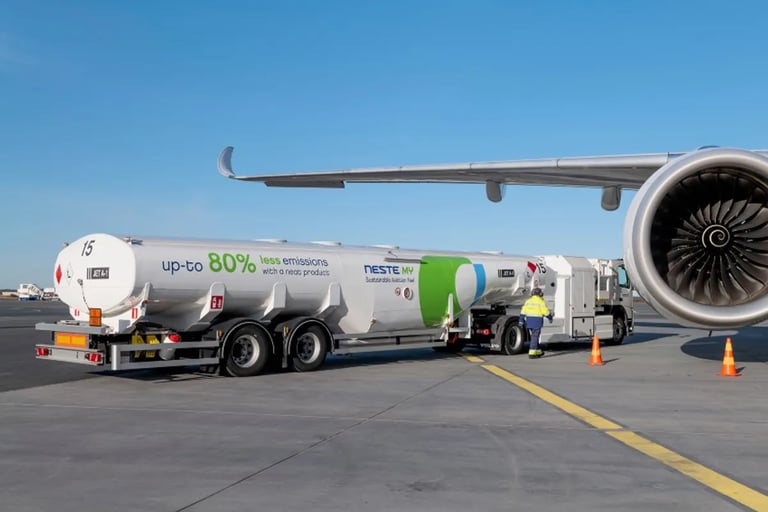

Currently, sustainable aviation fuels are priced 3 to 10 times higher than conventional fuel, but prices are expected to decline as production technologies improve.
The European Aviation Environmental Report 2025, released on January 14, outlines strategies to mitigate the aviation sector's impact on climate change, noise, and air quality, with an ambitious goal of achieving climate-neutrality in Europe by 2050.
Significantly, the average CO2 emissions per passenger-kilometer decreased to 83 grams in 2023, indicating progress towards sustainability goals in the aviation industry.
If fully implemented, the ReFuelEU Aviation supply mandate for sustainable aviation fuels could lead to a reduction of at least 65 million tonnes of CO2 emissions, or 47%, by 2050.
Notably, the number of European airports with net zero CO2 emissions targets has increased from 90 to 118, with 16 airports already achieving their goals by 2030.
In 2023, flights from EU and EFTA airports emitted 133 million tonnes of CO2, which is a 10% reduction compared to 2019, despite the number of flights still being 10% below pre-COVID levels.
Projected air traffic demand is expected to grow from 9.9 million flights in 2023 to 11.8 million by 2050, raising concerns about emissions but suggesting that growth can occur without increasing environmental impact.
The European Commission aims for a 90% cut in emissions by 2040 from 1990 levels, requiring significant action across all sectors, including aviation.
The report highlights advancements in sustainable aviation fuels (SAF) and air traffic management as key areas of development since the previous review in 2022, alongside modest reforms in the Single European Sky.
The ReFuelEU regulation mandates a minimum supply of sustainable aviation fuels, starting at 2% in 2025 and increasing to 70% by 2050, which is crucial for reducing emissions.
However, without controlling growth, the benefits of SAFs could be nullified, potentially leading to only a 3% reduction in emissions from 2019 levels by 2049.
The report, produced by the European Commission and other agencies, outlines eight recommendations to enhance environmental protection in civil aviation, emphasizing the need for a concerted effort to transition to cleaner aviation.
Summary based on 3 sources
Get a daily email with more EU News stories
Sources

European Commission
Indicating the way forward for sustainable European aviation
Eunews • Jan 14, 2025
Aviation, the recommendations of the EASA 2025 report
Business Travel News Europe • Jan 15, 2025
EU aviation environmental report highlights progress