Bulgaria Forms Fragile Coalition to End Political Crisis, Eyes Eurozone Goal
January 15, 2025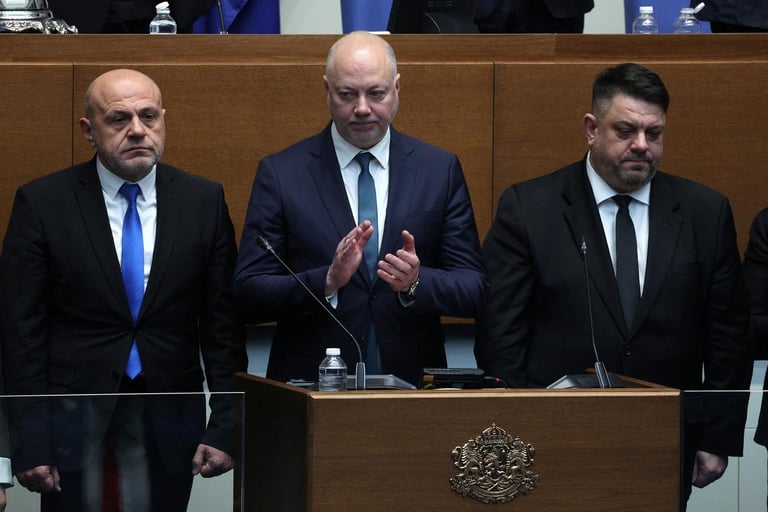

On January 16, 2025, Bulgaria's parliament narrowly approved a new coalition government led by the centre-right GERB party, with a vote of 125 in favor and 114 against.
This political shift follows a prolonged period of instability, marked by seven snap elections since 2021, initiated by former Prime Minister Boyko Borisov's resignation amid widespread anti-corruption protests.
The newly formed government aims to restore political stability, which is crucial for enhancing the use of EU funds for infrastructure and advancing Bulgaria's efforts to adopt the euro.
Zhelyazkov, the new Prime Minister, acknowledged the challenges in forming the coalition and stressed the importance of unity among the diverse parties to restore public confidence.
Public sentiment appears fatigued by the political situation, with a recent poll indicating that 76% of respondents are willing to accept compromises among parties to establish a functioning government.
Political analysts have expressed skepticism regarding the coalition's longevity, labeling it a difficult four-party alliance, yet they recognize it as a preferable alternative to ongoing elections.
Key priorities for the coalition include modernizing the army, improving judicial procedures, ensuring sustainable public finances, and increasing investment in research and development.
The coalition agreement establishes a Joint Governance Council to facilitate decision-making regarding deputy ministers and regional governors, promoting consensus over strict quotas.
The coalition comprises three deputy prime ministers and 19 ministers from GERB-UDF, the Bulgarian Socialist Party – United Left, and ITN, while the Dogan loyalists do not hold cabinet positions.
In his address, Zhelyazkov thanked the coalition partners for their collaboration despite political differences, acknowledging the ongoing political crisis in Bulgaria.
Despite lacking a formal majority, the coalition secured approval with support from a small ethnic Turkish party, which, while not officially part of the government, played a crucial role in the vote.
Experts have referred to the new administration as a 'cabinet of survival,' suggesting that while a government has been formed, the underlying political crisis remains unresolved.
Summary based on 0 sources