Brussels Sees Massive Teacher Protest Against Education Cuts and Reforms
January 27, 2025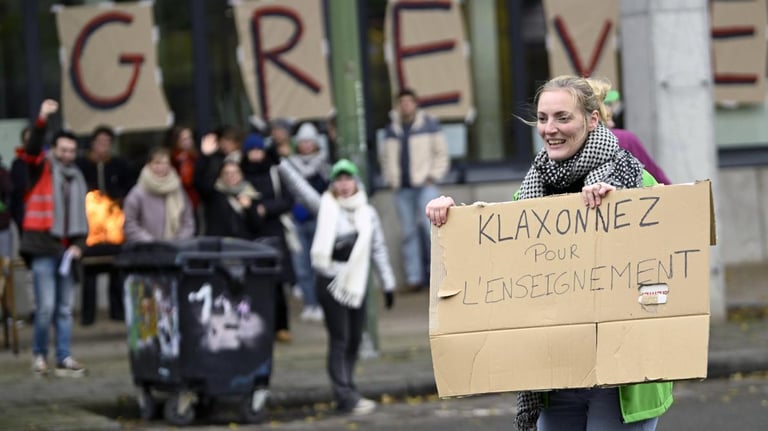

The demonstration began at Gare du Midi, where participants donned vests representing three major unions, rallying under the slogan 'Education is a right for all'.
On January 27, 2025, over 30,000 teachers protested in Brussels against government measures impacting education.
Concerns were raised by union leaders, including Roland Lahaye, regarding recent policy changes such as the Declaration of Political Community and a decree affecting vocational education.
Unions are particularly opposed to the government's plan to end teacher appointments in favor of permanent contracts, which they believe undermines job security.
The march progressed past key political locations, culminating in speeches by union leaders at Place des Barricades, emphasizing the collective call for action.
Valérie Glatigny, the Minister of the French-speaking Liberal Reformist Party, is primarily associated with the unpopular reforms that have sparked widespread discontent.
The Azur coalition's approval of a €15 million budget cut for vocational education in 2025, escalating to €45 million annually, is expected to significantly impact course offerings and student options.
Protesters displayed placards with slogans such as 'No cuts for education, it's our children's future!' and 'Your reforms, our suffering!', reflecting their frustration.
The unions declared a two-day strike on January 27 and 28, following a previous strike in late November, indicating escalating tensions between educators and the government.
Syndicates expressed concern that the announced budget cuts could lead to approximately 500 job losses in education, a claim disputed by the government.
The union coalition plans to assess the situation after the strike to determine future actions, having previously issued an 'unlimited' strike notice.
This protest marks a significant escalation in the conflict between teacher unions and the government of the Federation Wallonia-Brussels, highlighting the urgent need for dialogue.
Summary based on 8 sources