New Model Spots Ethereum Smart Contract Backdoors Amid Rising Fraud Concerns
January 6, 2025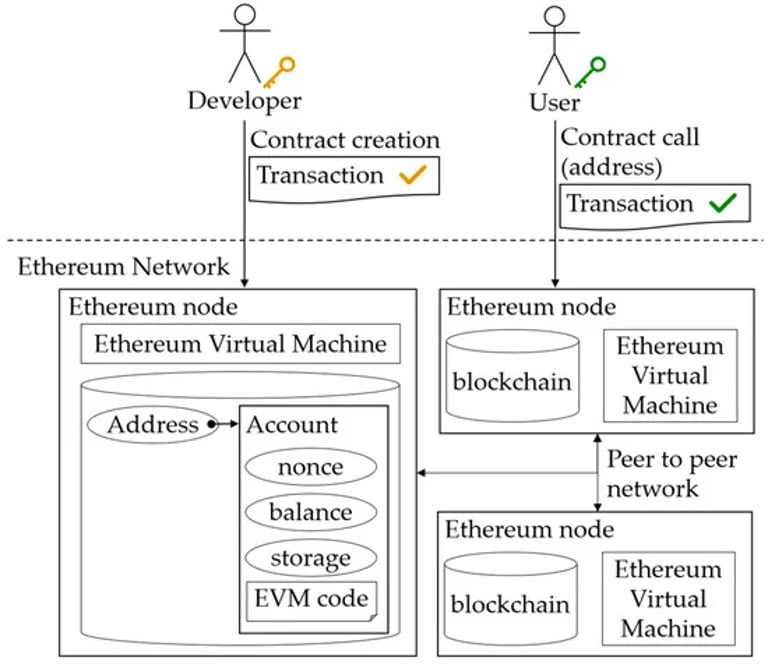

Decentralized Applications (DApps) leverage smart contracts, allowing users to execute contracts and transactions at a low cost.
Commercial services like GoPlus offer smart contract analysis for security, but they may overlook altered backdoor codes, leaving users exposed to potential scams.
Blockchain technology employs hash algorithms to securely link blocks in a chain, ensuring that data storage across distributed nodes remains unalterable.
A new backdoor code detection model has been proposed, which tracks balance changes within Ethereum smart contracts to identify six types of backdoor codes that can lead to financial losses.
The study highlights the existing structure of backdoor detection models and stresses the urgent need for enhanced detection capabilities, particularly given the rapid expansion of decentralized finance.
The effectiveness of this new model will be validated through the analysis of 989 smart contracts, examining various attack types while measuring accuracy, recall, and precision.
The absence of certification authorities increases the risk of fraud, particularly through 'Rug-pull' schemes, where developers exploit backdoor codes in smart contracts to misappropriate user funds.
A notable instance of fraud involved the SQUID GAME TOKEN, where developers manipulated contract codes to prevent users from selling their tokens, leading to complete investment loss for users.
The Ethereum network integrates blockchain technology with the Ethereum Virtual Machine (EVM), facilitating automatic contract execution without the need for a certification authority.
Investors are advised to conduct thorough investigations into projects before investing, as only 1% of the over 68 million deployed smart contracts on Ethereum reveal their source code, complicating risk assessments.
To address Rug-pull risks, DApp developers are creating Rug-pull lists to inform users, although these lists typically appear only after fraud has occurred, limiting their preventive effectiveness.
Summary based on 1 source