Hornsby Station Study: Forecasting 7,157 New Homes with Focus on Affordable Housing and Infrastructure
November 6, 2025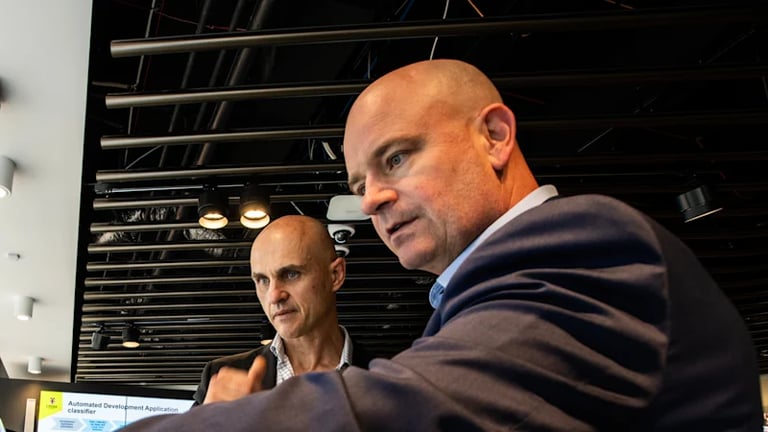

A core aim is to reduce information gaps between developers and planners, helping governments and councils grasp how zoning policies and land-value shifts actually affect feasibility and outcomes.
The approach includes considering value capture to fund green spaces and cycleways, with the model assuming a 20% developer profit margin while proposing uplift taxation by the government to finance essential infrastructure.
Model results align with official projections of 6,000 new homes in the Hornsby area and 3–10% affordable housing, but indicate that parcels east of the station within 800 metres may become infeasible for development.
Today’s efforts are a piecemeal rollout centered on Hornsby and a few councils, but the framework could be expanded NSW-wide to support transport-oriented development and low- to mid-rise housing policies.
The collaboration pools UNSW’s City Futures Research Centre, Value Australia, and Archistar, with the model hosted at Commonwealth Bank’s Eveleigh office to leverage data access and visualization tools.
A UNSW Housing Analytics Lab project uses a precinct feasibility explorer—an ML-based tool—to predict how NSW transport-oriented development zoning changes will impact housing feasibility, beginning with Hornsby around its train station.
The analysis projects total land values rising by about $312 million, with government capture slated at roughly $212 million via development contributions as a potential funding mechanism for infrastructure.
Three main thrusts drive the Hornsby station study: real-time housing data to estimate capacity, a forecast of about 7,157 new homes within 800 metres of Hornsby station—roughly 4,600 more than pre-policy forecasts—and an affordability note that only around 5% of this housing is expected to be affordable.
Summary based on 1 source
Get a daily email with more Australia News stories
Source

The Sydney Morning Herald • Nov 6, 2025
The crystal ball that shows how planning laws will change Sydney