Stanford Study Reveals EPO's Role in Immune Tolerance, Holds Promise for Autoimmunity and Cancer Therapy
December 10, 2025

A study from Stanford Medicine shows that erythropoietin (EPO) signaling through EPOR on dendritic cells can drive regulatory T cell–mediated peripheral immune tolerance, which has implications for autoimmune disease, transplant acceptance, cancer, and infection responses.
Blocking or tuning EPOR on dendritic cells can either promote tolerance or enhance immune activation, depending on whether the goal is dampening autoimmunity or boosting anti-tumor/antiviral responses.
In mice, depleting regulatory T cells eliminates tolerance and leads to rejection of mismatched bone marrow transplants, while exposing naive T cells to EPOR-expressing dendritic cells increases Treg differentiation.
The study’s data are publicly available: bulk RNA-seq under GEO accession GSE253056 and single-cell RNA-seq under GEO accession GSE284080, with source data described in the paper’s Sec50.
The findings were published in Nature, led by senior author Edgar Engleman and first author Xiangyue Zhang from Stanford Medicine.
A broad set of references situates the work within the wider immunology literature on dendritic cell biology, tolerance, cross-presentation, and cancer immunity.
Cited works cover dendritic cell ontogeny, tolerogenic pathways, cross-presentation mechanisms, and cancer immunology to support the study’s analysis.
The research, set for publication on December 10, 2025, builds on prior Science findings and links EPO signaling to dendritic-cell–mediated Treg activation and immune modulation.
Implications extend to cancer therapy, autoimmune disease treatment, and transplant tolerance, though current findings are in mouse models and require translation to humans.
The work reinforces links between EPO and immunosuppressive tumor environments, suggesting EPO’s primary role may be in regulating immune tolerance rather than solely erythropoiesis.
This positions EPO as a potential master immune regulator with a broader function beyond red blood cell production.
Related RNA-seq analysis tools are publicly available: bulk data scripts at GitHub and scRNA-seq analysis scripts at another GitHub, with processed data on Synapse.
Summary based on 4 sources
Get a daily email with more Science stories
Sources
Nature • Dec 10, 2025
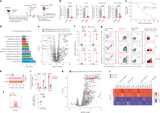
Erythropoietin receptor on cDC1s dictates immune tolerance
Medical Xpress • Dec 10, 2025
Immune system's 'on-off' switch may hold answers for cancer and autoimmunity
The Scientist Magazine • Dec 10, 2025
A Red Blood Cell Protein Turns Dendritic Cells Tolerant
Mirage News • Dec 10, 2025
Stanford Study Finds Key Immune Switch in Disease