Nnena Kalu Triumphs: Turner Prize Win Challenges Stereotypes and Celebrates Neurodivergent Artistry
December 10, 2025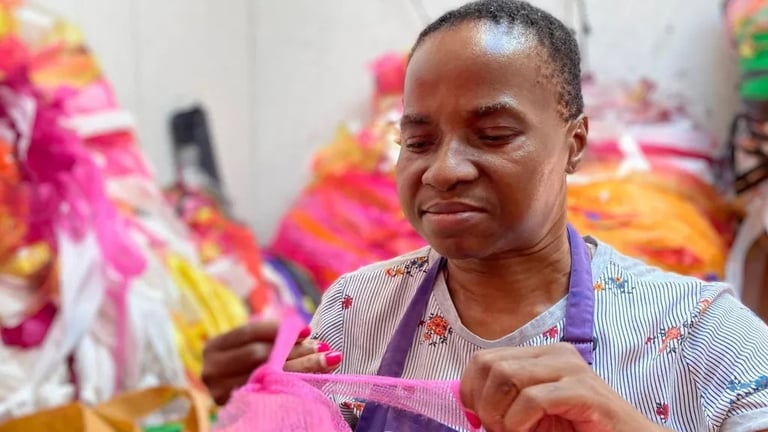


The other shortlisted artists were Rene Matić, Zadie Xa, and Mohammed Sami, each receiving £10,000; the exhibition runs at Cartwright Hall gallery through February 22, 2026.
Nnena Kalu, a Scottish artist known for large-scale abstract drawings and hanging sculptures, won the Turner Prize 2025 at a ceremony in Bradford during the UK City of Culture year.
Kalu presented works in Conversations, using pen, graphite, and chalk on two sheets of paper as part of the group exhibition.
Supporters, including her studio helper Charlotte Hollinshead, highlighted her perseverance amid discrimination and suggested the win could challenge stereotypes about her neurodivergence.
Her practice combines body, space, and material traces—such as old VHS tape, filigree plastic, and suturing—creating a sense that making and the artwork are inseparable.
Critics emphasized that Kalu’s work defies simple technique and should speak for itself, resisting easy comparisons.
Controversy surrounded her nomination with claims it privileged identity over art quality, though supporters argue the debate broadens audience engagement with contemporary art.
Kalu’s longtime studio manager described the nomination as seismic and noted the support system behind her work since 1999.
Her artwork is described as highly embodied and sensuous, with forms that feel alive and dynamically engage viewers.
Sami’s work focuses on memory and conflict in war-torn Iraq; Matić blends intimate photography with sound and objects addressing race, care, and vulnerability; Xa’s installation draws on Korean shamanism and ocean folklore.
Guardian critic Adrian Searle praised Kalu’s work as irreducible, comparing it to artists like Judith Scott and Hanne Darboven for its distinctive color and form.
Critics highlighted the emotional impact of her work, with references to Paul Klee’s guiding lines in the precision of her linework.
Summary based on 16 sources
Get a daily email with more EU News stories
Sources

The Guardian • Dec 9, 2025
Nnena Kalu becomes first artist with a learning disability to win Turner prize
The Guardian • Dec 9, 2025
Nnena Kalu’s embodied, sensuous art makes her a worthy Turner prize winner
BBC News • Dec 9, 2025
Turner Prize 2025: Nnena Kalu earns 'historic' win
Evening Standard • Dec 9, 2025
Scottish artist Nnena Kalu wins Turner Prize 2025